Once a person has died, the body must be quickly refrigerated or embalmed so that the tissues do not begin to break down. In most states you have a very limited timeframe to either refrigerate below 40 degrees or you must embalmed the body.
Medical examiner’s case
A death becomes a medical examiner case when the circumstances are unnatural, violent, sudden, unexpected, or suspicious. However, this designation does not necessarily mean an autopsy was performed. If the medical examiner cannot determine the cause of death with certainty, a postmortem examination may be conducted. An autopsy, also called a postmortem examination, is a specialized medical procedure in which a doctor determines the cause and manner of death by examining the body externally, inspecting internal organs, and testing tissues and bodily fluid. If a body is going to be cremated or transferred out of state, it will need to be approved first by the medical examiner.
Room temperature will degrade quickly.
After death, the body naturally begins to decompose. Autolysis, or self-digestion, begins within the cells, while normal intestinal flora and external organisms further break down the tissues. This process occurs faster at room temperature than under refrigeration below 40°F. For this reason, many states require un-embalmed bodies to be stored below 40°F.
What is the process of embalming?
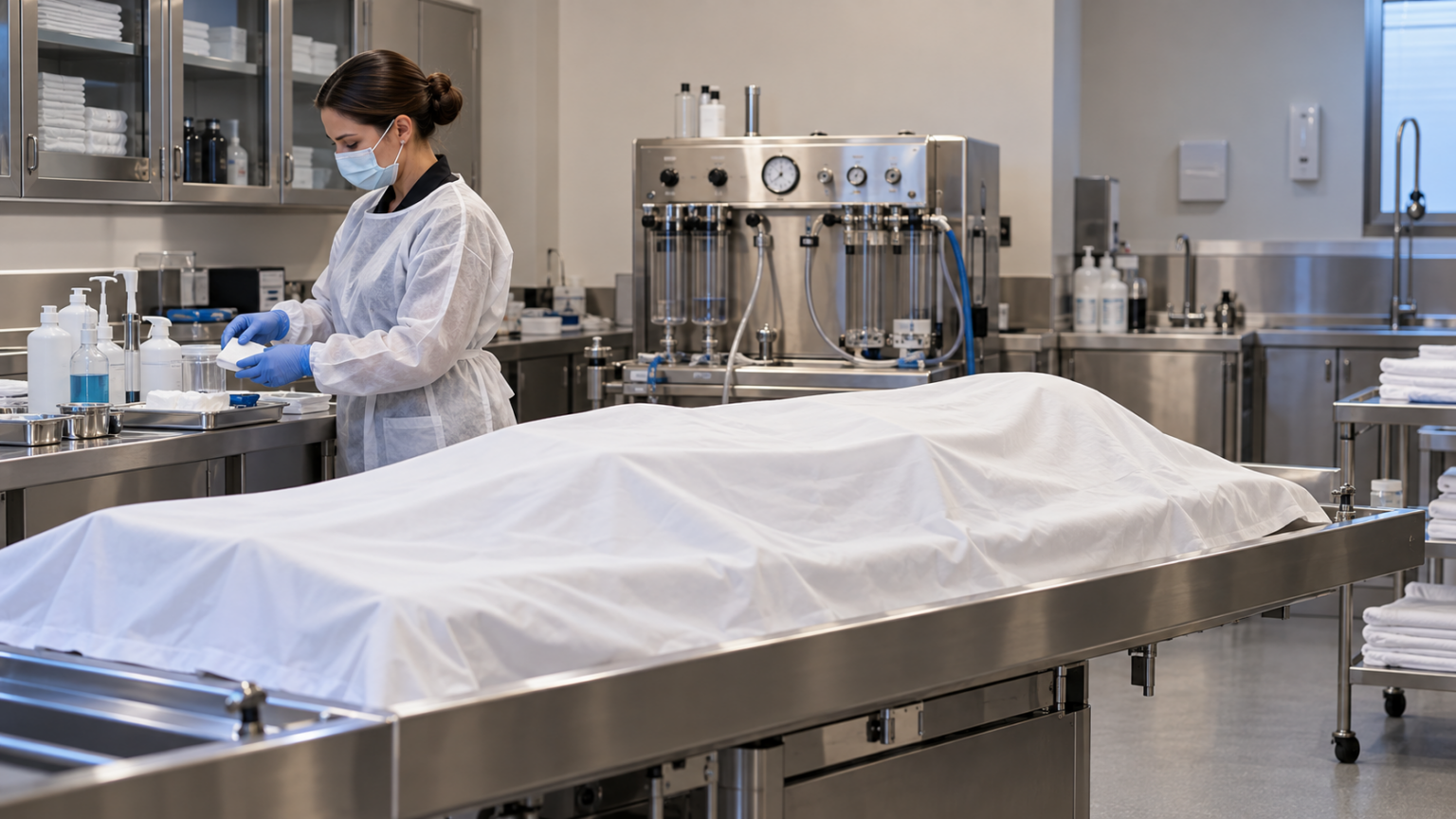
- Embalming is a temporary preservation procedure performed by a licensed embalmer. It typically includes:
- Cleaning, disinfecting, and positioning the body.
- Performing arterial embalming by introducing preservative solution into the circulatory system while draining blood and other fluids
- Treating the body cavities by removing fluids and gases from the chest and abdomen and replacing them with preservatives
- Closing incisions and treating areas that need additional preservation.
- Washing, dressing, grooming, and applying cosmetics to create a natural appearance for viewing
- Embalming slows decomposition and prepares the body for viewing or transportation, but it does not preserve it permanently.
How long does it last?
An embalmed body has no fixed preservation period. Embalming slows decomposition but does not stop it. For a viewing or funeral, embalming commonly preserves a presentable appearance for several days to a few weeks. With refrigeration and controlled conditions, preservation may last longer. Heat, humidity, illness, trauma, the embalming method, and delays before embalming can shorten the period. After burial, decomposition continues and may take years, depending on the casket, vault, soil, moisture, and climate.
Choosing between an open and closed casket for the viewing?
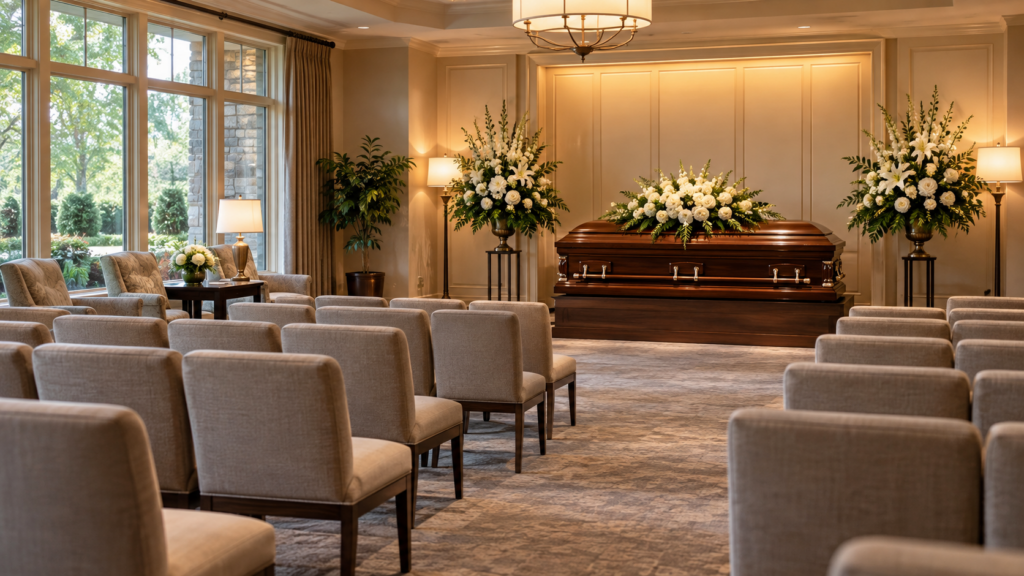
The choice between an open and closed casket depends on the family’s preferences, the condition of the deceased, and the tone of the service. An open casket allows loved ones to view the deceased and say goodbye in person, while a closed casket offers greater privacy and may be more suitable when viewing is not desired or recommended. The funeral director can explain both options and help the family choose the arrangement that best fits their wishes and circumstances. If the deceased cannot be viewed, the family may display a photograph or a collection of photographs in remembrance.
Viewing the body; clothes, makeup, etc.
For an open-casket service, families should choose loose-fitting clothing with high necklines and long sleeves to create a natural, dignified appearance. These garments can also conceal discoloration, medical ports, IV bruising, or autopsy incisions near the collarbone and forearms. For a closed-casket service, families may select clothing that reflects the deceased’s personality. A recent photograph can help the cosmetologist recreate the person’s usual hairstyle, makeup, and facial hair. Families may also bring the deceased’s preferred makeup or fragrance for the funeral home to use.
Long-term storage options
A funeral service may be postponed because of family travel, prior commitments, or other circumstances. An example is scheduling at Arlington National Cemetery depends on factors such as confirmed eligibility, the type of remains, available military resources, the deceased’s priority status, and the family’s preferences. After all required documents are received at Arlington National Cemetery and eligibility is verified, services for casketed remains are generally scheduled within several weeks, although timing varies. If interment is delayed, the funeral home can provide temporary refrigerated storage until the service. Depending on the circumstances, the body may need to be removed from the casket and placed in a refrigeration unit.