

How to Start a Funeral Home Lawsuit
If you suspect a funeral home mishandled your loved one’s remains, save the contract, receipts, messages, and any photos. Write down what happened and when. Ask the funeral home, in writing, for its identification and handling records. Then contact your state funeral licensing board and speak with a lawyer about whether a funeral home lawsuit is possible.
A body mix-up, unauthorized cremation, or failure to follow burial instructions can leave a family unsure how to honor their loved one. You do not need to know exactly what went wrong before asking for records and preserving evidence.
I’m Tom Carey, a Pinellas County legal professional with experience as a senior partner. I draw on that legal background to explain the first steps toward a funeral home lawsuit, outlined below.
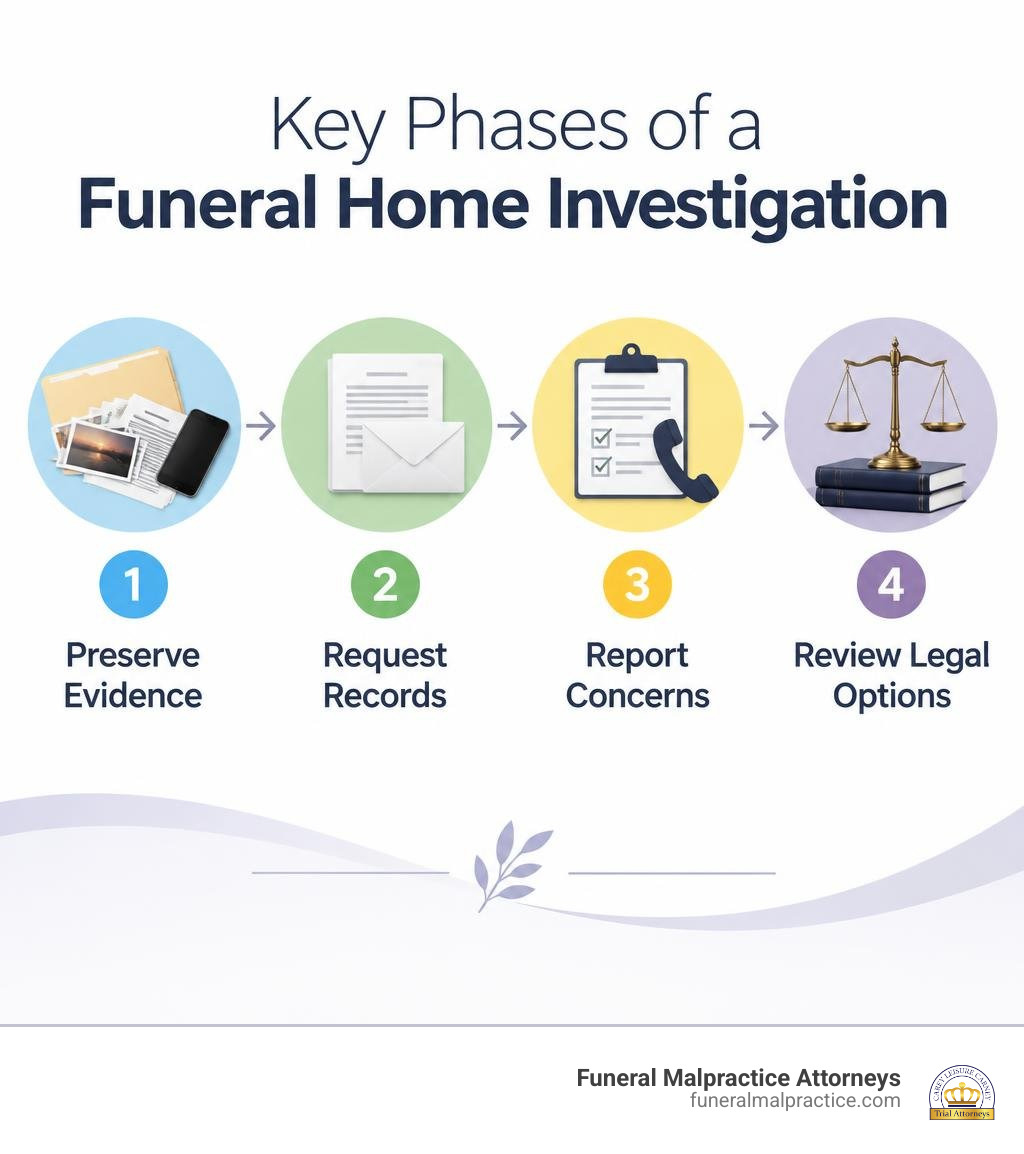
Common Types of Mortuary Misconduct and Regulatory Failures

When we entrust the care of a deceased family member to a mortuary or death-care provider, there is a fundamental legal and moral expectation of dignity, safety, and meticulous adherence to instructions. Unfortunately, severe operational lapses occur across the industry. Grieving clients are often blindsided to discover that gross negligence or deliberate deceit compromised their loved one’s final arrangements.
Uncovering Grave Errors: From Body Mix-Ups to Desecration
Mortuary malpractice takes many devastating forms. Some of the most catastrophic errors involve severe identification breakdowns, resulting in body mix-ups during viewings or interments. In one high-profile incident, a N.J. family sues funeral home for $50 million, alleging it nearly buried wrong body in mother’s casket. In another egregious matter, the family of Jose Luis Diaz sought $18 million after his remains were allegedly placed into another man’s casket and displayed at a public wake.
Unauthorized cremations represent another irreversible breach. Families often establish strict written instructions rooted in religious convictions or personal wishes. Yet, administrative carelessness can lead morticians to cremate a body mistakenly. This occurred when an Ohio woman’s family alleges funeral home ignored wishes, cremated her, permanently depriving the family of her planned burial alongside her late husband.
Other forms of misconduct include improper temperature control, co-mingling of cremated remains, and illicit organ retention or body brokerage schemes. A detailed review of understanding funeral malpractice and common legal grounds for claims highlights how these operational failures violate established statutory duties of care.
Repeat Offenders and Gaps in Mortuary Oversight
A troubling pattern in the death-care industry is the presence of repeat offenders operating despite ongoing complaints. Disciplinary actions by state licensing boards often face bureaucratic delays, limited inspection budgets, and legal hurdles that prevent immediate shutdowns.
For example, when a NYC funeral home company hit with another lawsuit over overseas burial mix-up – CBS New York made headlines, public records revealed the facility had been named in nearly 100 lawsuits and cited for 82 violations in a single year. Similar oversight failures occurred when investigators discovered 56 decomposing bodies at the South Chicago Chapel, where remains were stored without proper refrigeration. Taking proactive measures to protect grieving families from mortuary exploitation and embezzlement schemes is essential when state regulators fail to act swiftly enough to prevent widespread harm.
When to File a Funeral Home Lawsuit for Mortuary Negligence
Filing a civil claim is often the only mechanism available to compel accountability, uncover the truth, and secure financial recovery for severe psychological trauma. When a facility breaches its fiduciary duty, legal action establishes a formal discovery process to subpoena internal logs and preserve crucial physical evidence.
| Legal Cause of Action | Core Element to Prove | Common Mortuary Example |
|---|---|---|
| Negligence | Failure to adhere to the standard duty of reasonable care | Improper refrigeration leading to preventable decomposition |
| Breach of Contract | Violation of explicit written service agreements | Performing a cremation when direct burial was purchased |
| Negligent Infliction of Emotional Distress | Severe psychological trauma caused by careless handling | Presenting the wrong deceased individual at an open-casket viewing |
| Intentional Infliction of Emotional Distress | Extreme, outrageous, or reckless conduct exceeding human decency | Desecration of remains or fraudulent substitution of ashes |
| Consumer Fraud | Deceptive business practices or material misrepresentation | Billing for embalming services that were never actually performed |
Grounds That Justify a Funeral Home Lawsuit
Civil claims against death-care providers are built upon specific legal doctrines. Negligent infliction of emotional distress (NIED) and intentional infliction of emotional distress (IIED) form the cornerstone of many actions because the primary harm suffered by the family is profound mental anguish.
In cases involving illicit profiteering, claims expand into civil conspiracy, fraud, and commercial torts. In a notable Colorado matter, a Class Action Lawsuit Filed Against Sunset Mesa and Several Other Entities brought together 64 families after it was revealed the business operated an unauthorized body brokerage scheme—selling dismembered parts while returning urns containing powdered concrete, sand, or cat litter to unsuspecting loved ones.
The Severe Emotional and Financial Toll on Grieving Families
The psychological damage caused by mortuary negligence halts the natural grieving process. Families are forced to endure prolonged uncertainty, the trauma of exhumations, or the permanent loss of their loved one’s actual remains.
In extreme matters involving alleged intentional concealment, such as when Kendrick Johnson’s parents suing Valdosta, Georgia funeral home in case of bizarre “gym-mat death” – CBS News uncovered that their son’s internal organs had been discarded and replaced with newspaper, the resulting litigation seeks not only compensatory damages for emotional devastation but also substantial punitive damages to penalize outrageous conduct.
How to Investigate Negligence and Build a Legal Claim
Building a successful legal claim requires a swift, structured investigative approach. Because physical evidence can degrade rapidly and business records can be altered, taking disciplined action preserves your legal standing.
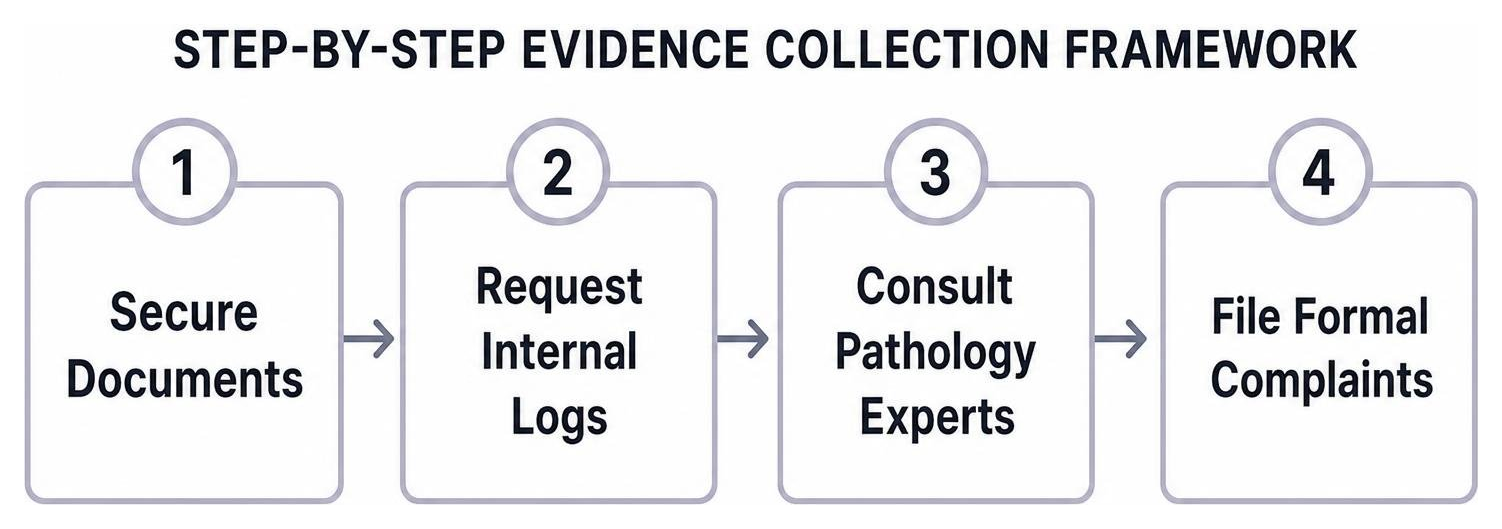
Steps to Launch an Investigation for a Funeral Home Lawsuit
- Secure All Paperwork and Financial Records: Gather the initial purchase agreement, general price lists, itemized statements, and payment receipts. Note any discrepancies between promised services and what occurred.
- Issue a Formal Demand for Records: Send a written demand for the complete chain-of-custody log, refrigeration temperature records, embalming reports, and transfer manifests.
- Seek Independent Pathology or Forensic Review: When physical condition or cause of death is obscured, an independent autopsy or forensic evaluation of remains is vital. A stark example arose when Parents sue funeral homes for allegedly giving them son’s brain in a box | AP News, necessitating forensic examination after biological matter leaked from an improper container.
- File Complaints with State Regulators: File a detailed complaint with the state licensing board to prompt an official administrative inspection that can uncover parallel violations.
Protecting Your Loved One: Verifying Reputable Providers
To minimize the risk of mortuary errors before or during arrangements, families can follow these practical verification steps:
- Verify current licensing and clean disciplinary standing with your state’s funeral service regulatory board.
- Demand a written chain-of-custody protocol explaining how the facility tracks identification from pickup through final disposition.
- Request a tour or verification of on-site climate-controlled refrigeration units to ensure unembalmed remains are kept below 40 degrees Fahrenheit.
- Require positive visual identification protocols before any irreversible procedure, such as cremation or final casket sealing.
- Ensure all specific religious or personal burial preferences are detailed directly in the signed contractual agreement.
Frequently Asked Questions About Funeral Home Lawsuits
How long do families have to file a lawsuit against a negligent mortuary?
Deadlines are dictated by state statutes of limitations for personal injury, breach of contract, or professional negligence, which typically range from one to four years. In many jurisdictions, the “discovery rule” applies, meaning the time limit begins on the date the family discovered—or reasonably should have discovered—the misconduct, rather than the date the error occurred.
What evidence is required to prove a funeral home mishandled remains?
Successful claims rely on objective documentation:
- Signed service contracts and itemized billing statements
- Mortuary tracking tags and transfer logs
- Facility temperature logs and cold-storage maintenance records
- Independent medical examiner reports or forensic assessments
- Photographic or video evidence documenting physical condition or misidentification
- Written correspondence and contemporaneous notes of verbal conversations
Can multiple families join a class action against a single facility?
Yes. When a funeral home engages in widespread misconduct—such as systematic failure to refrigerate remains, unauthorized body-part sales, or mass mislabeling of ashes—affected plaintiffs can seek judicial class certification. This combines claims into a single collective lawsuit, consolidating evidence and holding repeat offenders broadly accountable.
Conclusion
When a funeral provider violates the sacred trust placed in them, families deserve answers, transparency, and civil justice. At Funeral Malpractice Attorneys, we provide dedicated legal representation for families navigating the aftermath of mortuary misconduct, cemetery negligence, and crematory errors. If you suspect that a death-care provider failed to treat your loved one with dignity or violated your direct instructions, we invite you to explore our specialized crematory malpractice legal representation services and schedule a free, confidential consultation to protect your family’s rights.