
How to Start a Funeral Error Claim
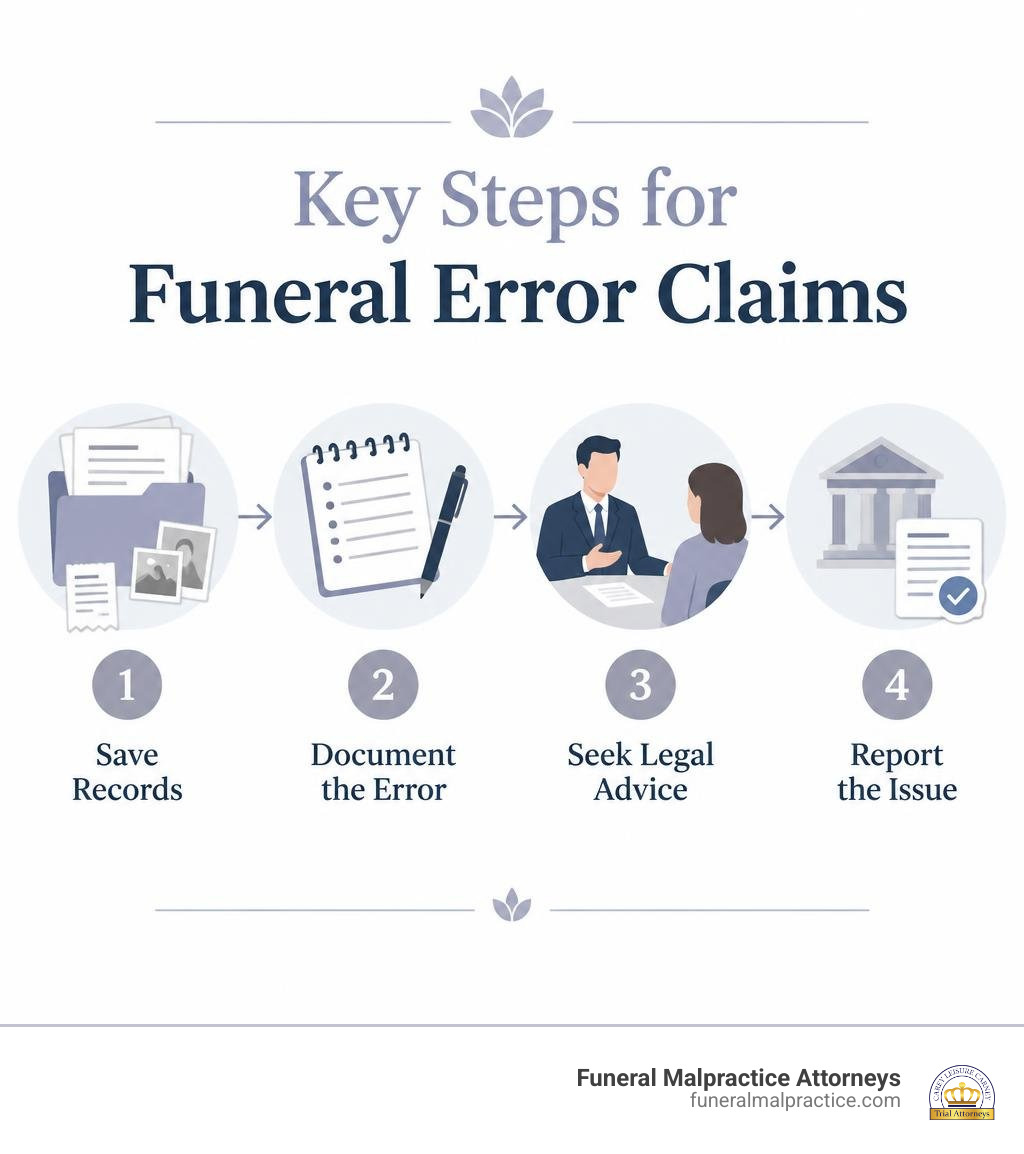
If a funeral home, crematory, or cemetery mishandled your loved one’s remains, start by preserving evidence. Save the contract, cremation or burial authorizations, receipts, messages, and any photos. Write down what happened and when you learned of it. Then speak with an attorney about possible funeral error claims, including negligence or breach of contract. You can also report the problem to Florida’s funeral services regulator.
A body mix-up or unauthorized cremation cannot simply be undone. Acting promptly can help protect records and clarify your family’s legal options.
I’m Tom Carey, a Pinellas County legal professional who has served as a senior partner at a Florida law firm. I draw on that legal experience to explain funeral error claims and the steps families can take next.
Common Mortuary Mistakes and Mishandling of Remains
When families place a loved one into the care of a mortuary or cemetery, they place immense trust in those professionals. Unfortunately, operational shortcuts, inadequate chain-of-custody tracking, and sheer carelessness can lead to heartbreaking outcomes.
Mishandling claims commonly arise from several severe failures:
- Unauthorized Cremation: Performing a cremation without obtaining signed authorization from the legally recognized next of kin, or cremating remains when the family contracted for a traditional burial.
- Body Mix-Ups and Wrongful Delivery: Transporting or preparing the wrong individual, dressing the wrong person in family-provided attire, or placing another person into the casket.
- Improper Embalming and Decomposition: Inadequate chemical preservation or broken refrigeration units, leading to rapid tissue decay and forcing families into unwanted closed-casket services.
- Plot Misburials and Vault Failures: Interring a casket into an incorrect grave plot, cracking an outer burial container during placement, or damaging remains during mechanical handling.
- Dropped Caskets or Physical Trauma: Physical mishandling during transport, viewings, or graveside services resulting in dropped caskets and physical desecration.
| Mortuary Error | Primary Cause | Typical Legal Remedies |
|---|---|---|
| Unauthorized Cremation | Failure to verify next-of-kin permissions | Breach of contract, gross negligence, loss of sepulcher |
| Body Misidentification | Broken chain of custody, unverified tags | Negligence, severe emotional distress, restitution |
| Embalming / Preservation Failure | Equipment breakdown, improper chemical mix | Breach of contract, refund of preparation fees, mental anguish |
| Cemetery Misburial | Faulty plot mapping, record overselling | Court-ordered disinterment/reburial, contract damages |
| Dropped Caskets / Trauma | Negligent handling by staff during transport | Property damage, severe emotional distress damages |
Misidentification and Casket Mix-Ups
Misidentification represents one of the most traumatic mortuary errors. A failure in basic identification tagging at the hospital, mortuary intake, or preparation suite can cascade through the entire process. In some extreme situations, mortuaries fail to catch these errors before shipping remains overseas, as seen when a second family sued a New York funeral home over an international body mix-up involving the wrong remains being transported to Guatemala.
Families often discover these errors during an open-casket viewing when features do not align, or worse, after an unauthorized disposition has already taken place. Under the common law “right of sepulcher,” surviving next of kin possess an absolute legal right to possess the remains of their deceased loved one for preservation and dignified burial. When a facility deprives a family of this right via misidentification, it exposes itself to direct tort liability.
Cemetery Errors, Plot Overselling, and Misburials
Cemeteries also commit operational failures, ranging from double-selling burial plots to burying a casket in the wrong lot or installing improperly sized concrete vaults.
Resolving cemetery issues requires examining both state consumer protection statutes and the explicit language found inside cemetery agreements. For example, in federal litigation examining cemetery contract disputes, such as SCHAEFER v. SCI PENNSYLVANIA FUNERAL SERVICES, INC., courts have analyzed how correction clauses and specific contract terms dictate what remedies are available when dimensional liner discrepancies or plot misallocations occur. Understanding how these contracts operate is essential when challenging burial disputes.
Legal Grounds for Filing Funeral Error Claims
A funeral home is not merely a retail establishment selling caskets; it is a professional service provider bound by common law duties, contractual obligations, and statutory requirements. When establishing liability, we evaluate multiple distinct causes of action based on understanding common legal grounds for funeral malpractice.
Negligence and Breach of Contract
Every mortuary owes a duty of reasonable care to treat remains with dignity and execute services according to professional industry standards. A negligence claim requires proving four fundamental elements:
- Duty: The mortuary assumed a legal duty to care for the deceased and provide agreed-upon funeral arrangements.
- Breach: The provider breached that duty through an act or omission (e.g., mixing up remains, failing to refrigerate, or dropping a casket).
- Causation: The mortuary’s specific breach directly caused the harm or disruption.
- Damages: The surviving family suffered measurable economic or emotional harm.
Alongside negligence, a breach of contract action focuses on the itemized agreement signed by the family. Under the Federal Trade Commission’s (FTC) Funeral Rule, funeral providers are legally required to give consumers itemized pricing disclosures (the General Price List) and honor explicit service selections. When a funeral director accepts payment for specific embalming procedures, a specific casket, or a designated burial timeline and fails to deliver, they have committed an actionable contractual breach.
Emotional Distress and Right of Sepulcher
Historically, the “economic loss rule” limited legal claims to out-of-pocket financial losses unless accompanied by physical injury. However, mortuary law contains well-established exceptions across many jurisdictions. Courts recognize that the primary purpose of a funeral contract is not commercial gain, but emotional closure and peace of mind.
Families can pursue claims for:
- Negligent Infliction of Emotional Distress (NIED): Arising when severe carelessness directly traumatizes close family members, often supported by physical manifestations of grief, sleep disruption, or psychological care records.
- Intentional or Reckless Infliction of Emotional Distress (IIED): Reserved for extreme, outrageous conduct, such as knowingly concealing a mix-up, forging cremation signatures, or abandoning remains.
- Interference with the Right of Sepulcher: A standalone tort that compensates next of kin for the mental anguish caused by unlawful interference with their custody and burial rights.
How to Sue a Mortuary: Step-by-Step Guide to Action
Pursuing a legal claim against a mortuary or cemetery requires a methodical approach to establish liability and prevent the destruction of records.

Step 1: Demand Immediate Explanation and Halt Dispositions
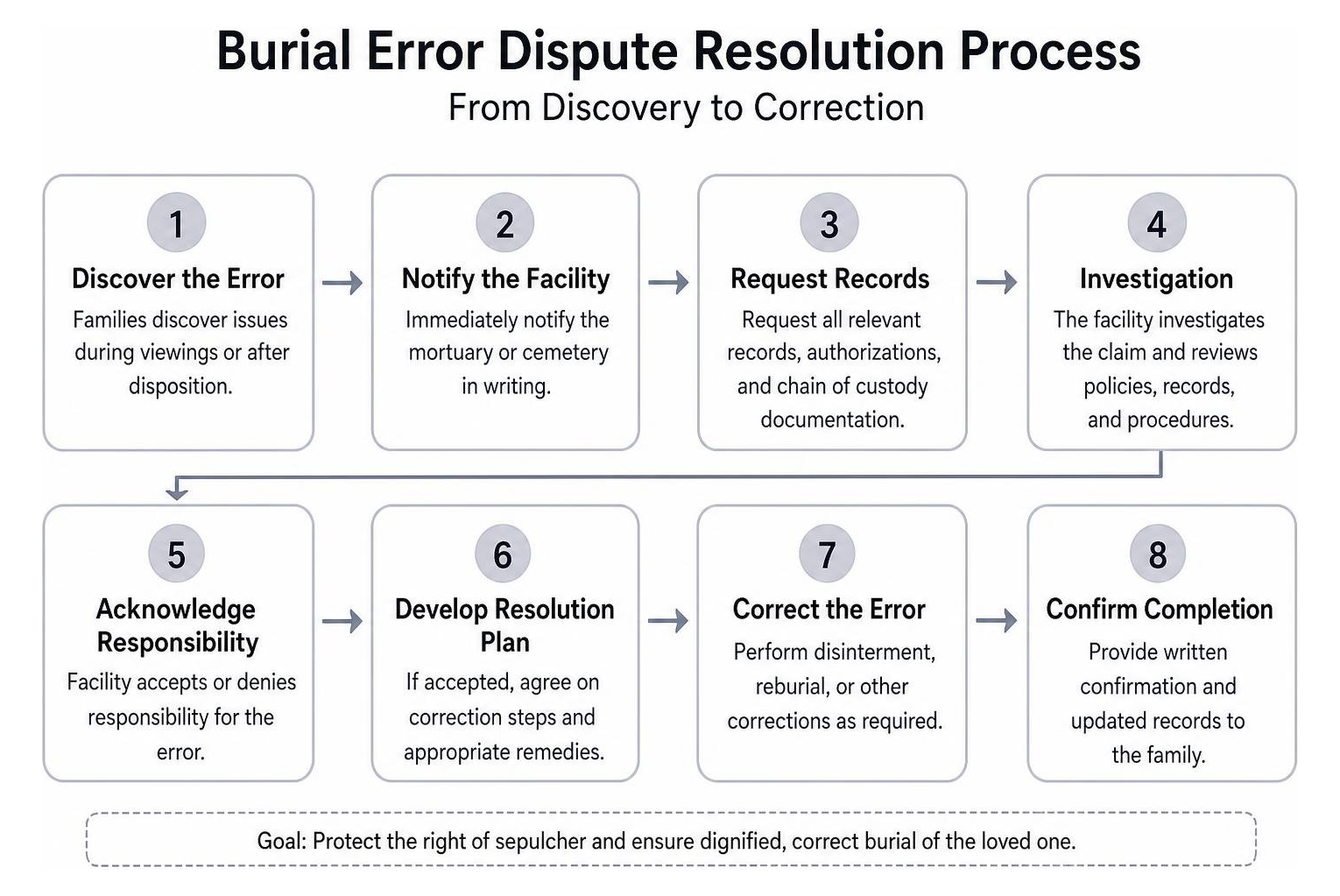
If you suspect an error during a viewing or prior to burial or cremation, instruct the facility in writing to stop all procedures immediately. Never permit an irreversible procedure (such as cremation or closing a grave) if you suspect the identity or preparation is incorrect.
Step 2: Preserve Physical and Digital Records
Gather every document provided by the facility, including:
- The initial Statement of Goods and Services Selected
- Embalming and cremation authorization forms
- Receipts and proof of payment
- Written text messages, emails, and call logs with funeral home personnel
Step 3: Document the Physical Evidence
Take clear, high-resolution photographs or videos of the issue if possible (such as cosmetic defects, incorrect caskets, vault damage, or identification tags). If physical differences suggest a body mix-up, note distinct features such as tattoos, scars, height, or dental characteristics.
Step 4: Lodge Regulatory Complaints
File a formal administrative complaint with your state’s regulatory licensing board (in Florida, the Division of Funeral, Cemetery, and Consumer Services). Regulatory investigators can inspect the facility, review internal logbooks, and issue administrative findings that support your civil case.
Step 5: Consult a Qualified Malpractice Attorney
Engage legal counsel experienced in mortuary negligence. Your attorney will issue a formal spoliation letter ordering the business to preserve refrigeration logs, transport records, and surveillance footage before they are routinely overwritten.
Essential Evidence Needed to Prove Funeral Error Claims
Building an unassailable case requires comprehensive documentation demonstrating that the mortuary failed to meet accepted industry standards.
- Intake and Chain-of-Custody Logs: These internal records track who received the body, when it was transferred between refrigeration and preparation suites, and which staff members handled each step.
- Identification Tags and Wristbands: Comparing hospital discharge tags with mortuary ankle tags often reveals exactly where the misidentification occurred.
- Temperature and Maintenance Logs: For embalming or decomposition disputes, mechanical records demonstrate whether refrigeration units were operating at mandated temperatures.
- Photographic Records: Clear visual evidence documenting the condition of the remains, the wrong casket, or physical damage to burial vaults.
- Witness Statements: Testimonies from family members, clergy, and attendees who witnessed the mishandling or noticed physical discrepancies during services.
The Role of Expert Testimony and Mortuary Standards
General personal injury attorneys often treat funeral claims like standard slip-and-fall cases, but mortuary litigation requires specialized technical knowledge. Expert witnesses play a decisive role in establishing the mortuary standard of care.
Qualified experts in these cases typically include:
- Licensed Funeral Directors and Embalmers: To explain standard operating procedures, proper chemical concentrations for embalming, and professional standards for casket presentation.
- Forensic Pathologists: To assess rates of tissue decomposition, determine whether refrigeration was interrupted, or conduct identity verifications.
- Cemetery and Crematory Operators: To testify on standard operating procedures regarding plot layout mapping, grave excavations, and retort operations.
These experts evaluate the defendant’s conduct against established state licensing statutes and industry customs, providing the court with objective proof of professional failure.
Damages and Legal Remedies in Funeral Litigation
When filing a lawsuit, families may seek several categories of damages depending on the severity of the misconduct:
- Economic Damages: Direct financial losses, including refunds of all funeral and burial fees, costs paid to transfer remains to an alternative provider, cemetery disinterment and re-interment fees, and out-of-pocket medical expenses for psychological therapy.
- Non-Economic Damages: Compensation for severe emotional distress, mental anguish, shock, insomnia, loss of peaceful memories, and the ongoing trauma of knowing a loved one was mistreated.
- Punitive Damages: In cases involving gross negligence, fraud, or intentional wrongdoing (such as commingling cremated remains or deliberately forging next-of-kin signatures), courts may award punitive damages to punish the facility and deter future misconduct. In addition to handling physical mishandling cases, legal advocacy plays a vital role in protecting grieving families from mortuary financial exploitation and deceptive trade practices.
Statutes of Limitations Governing Funeral Error Claims
Every state establishes strict deadlines, known as statutes of limitations, within which a family must file a lawsuit. In Florida, the deadline for filing general negligence claims is governed by state civil practice statutes, making prompt action critical.
The statutory clock typically begins running on the date the negligent act occurred. However, under the Discovery Rule, the timeline may be paused (tolled) until the date the family reasonably discovered, or should have discovered, the error. For instance, if a cemetery mistakenly interred remains in the wrong plot, the family might not discover the error until years later when attempting to arrange an adjacent burial.
Failing to file within the statutory window permanently forfeits your right to seek financial recovery in court, highlighting the need to seek legal counsel as soon as an issue is identified.
Frequently Asked Questions About Mortuary Negligence
What should I do immediately after discovering a funeral mistake?
Immediately notify management at the facility in writing and insist that all further processing, burial, or cremation steps cease until the issue is addressed. Secure all physical contracts, receipts, and identification tags, take photographs if safe and appropriate, and contact an attorney who specializes in funeral malpractice before signing any release or settlement forms.
Can I sue for emotional distress if no physical injury occurred?
Yes. Although many areas of law require a physical impact or injury to recover damages for emotional distress, mortuary malpractice is a recognized exception in Florida and many other jurisdictions. Because funeral services specifically involve deep personal sentiment, courts permit next of kin to seek damages for severe mental anguish, grief, and emotional trauma caused by the mishandling of a deceased family member.
How do state licensing boards and FTC rules protect consumers?
State licensing agencies establish professional standards for funeral directors, inspect mortuaries, and have the power to suspend or revoke operating licenses for misconduct. At the federal level, the FTC Funeral Rule requires transparent, itemized pricing and prevents deceptive practices, such as requiring families to purchase a casket for direct cremation or misrepresenting local preservation laws.
Conclusion

Discovering that a funeral home, crematory, or cemetery mishandled your loved one’s remains is a deeply upsetting experience. You do not have to accept corporate deflections or dismissive excuses during your time of grief. Professional death-care providers have a strict legal duty to handle every deceased individual with dignity, care, and absolute compliance with family instructions.
Our team at Funeral Malpractice Attorneys represents families in Clearwater, Florida, and surrounding areas who have suffered through mortuary errors, misidentifications, and cemetery negligence. We provide compassionate advocacy and focused legal experience to hold negligent facilities accountable, recover fair compensation, and bring your family peace of mind.
If you suspect your loved one’s remains were mishandled, explore your rights to legal representation for funeral malpractice cases by contacting our office today for a free, confidential case consultation.