How to Find a Funeral Home Negligence Attorney Near You
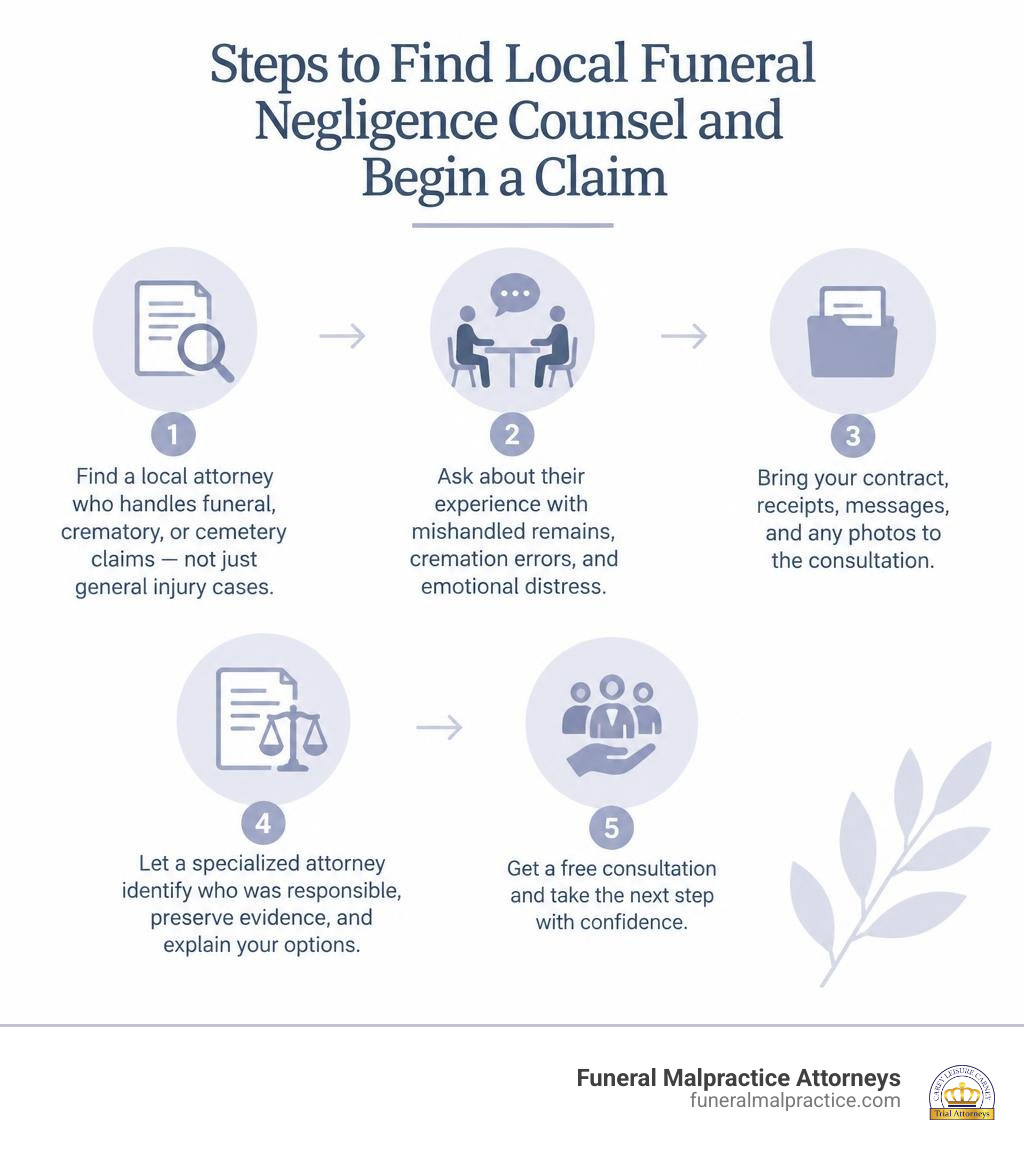
If you’re searching for a funeral home negligence attorney near me in the Clearwater area, look for someone who handles funeral, crematory, or cemetery claims—not just general injury cases. Ask about their experience with mishandled remains, cremation errors, and emotional distress. Bring your contract, receipts, messages, and any photos to the consultation.
A specialized attorney can help you identify who was responsible, preserve evidence, and understand your options. Funeral Malpractice Attorneys offers free consultations for families facing these concerns.
I’m Tom Carey, a Florida legal professional who has served as a senior partner at a Pinellas County law firm. That local legal experience informs my guidance for anyone searching for a funeral home negligence attorney near me.
Similar topics to funeral home negligence attorney near me:
- understanding funeral home negligence
- can you sue a funeral home for emotional distress
- reasons to sue a funeral home
Understanding Funeral Home Negligence and Legal Grounds for a Lawsuit
Losing someone you love is an emotional storm. During this vulnerable time, we entrust mortuaries, crematories, and funeral directors with our family members’ dignity. When that profound trust is shattered by carelessness or corner-cutting, the emotional impact is devastating.
Funeral home negligence occurs when a death care provider fails to uphold standard professional practices, state regulations, or contractual duties, resulting in severe emotional trauma or financial harm. We see these cases as a failure of professional responsibility. When you bring your loved one into a facility, an explicit duty of care exists between the mortuary and your family.
Legally, these lawsuits rest on several fundamental claims:
- Breach of Contract: When you hire a mortuary, you sign an agreement specifying embalming, viewing dates, casket choices, transportation, or cremation protocols. Failing to provide these services as agreed constitutes a direct breach.
- Professional Negligence (Malpractice): Licensed morticians and funeral directors must adhere to accepted mortuary science standards. Failing to refrigerate remains properly or mishandling chemicals constitutes actionable negligence.
- Intentional or Reckless Infliction of Emotional Distress: When misconduct is so egregious that it shocks the conscience, courts recognize the severe psychological toll inflicted on the surviving family.
- Violations of Industry Regulations: Funeral homes must comply with federal and state rules, including the Federal Trade Commission (FTC) Funeral Rule, which protects consumers from deceptive pricing and unapproved procedures, as well as statutory rules under The 2026 Florida Statutes regulating death care operations and disciplinary actions.
Learning more about understanding funeral malpractice and common legal grounds for claims can clarify where your experience fits within these legal frameworks.
Common Examples of Mortuary Neglect and Abuse
Negligence in mortuary care takes many heartbreaking forms. While minor administrative delays are frustrating, true malpractice involves significant breaches of care. Common examples we encounter include:
- Body Mishandling and Storage Failures: Failing to maintain adequate refrigeration facilities, leading to premature decomposition and depriving the family of an open-casket service.
- Improper Embalming: Using incorrect chemical mixtures, rushing the preservation process, or failing to properly prepare remains, resulting in visible deterioration during public visitations.
- Unauthorized Cremation: Cremating a body without explicit, written authorization from the legally authorized next of kin, or cremating remains when the family contracted for a traditional burial.
- Commingled or Switched Ashes: Inadequate chain-of-custody tracking in the crematory, resulting in families receiving the cremated remains of a stranger or ashes mixed from multiple individuals.
- Theft of Personal Effects: Employees removing fine jewelry, heirlooms, gold teeth, or clothing from the deceased prior to burial or cremation.
- Defective or Substituted Caskets: Charging families for high-end, sealed caskets while secretly placing the deceased in a lower-grade container or reusing rental caskets without consent.
Funeral Home Negligence vs. Cemetery Negligence
Families often interact with both funeral homes and cemeteries simultaneously, leading to confusion when an error occurs. While mortuaries handle preparation, preservation, and services, cemeteries manage the physical grounds, burial plots, and crypts.
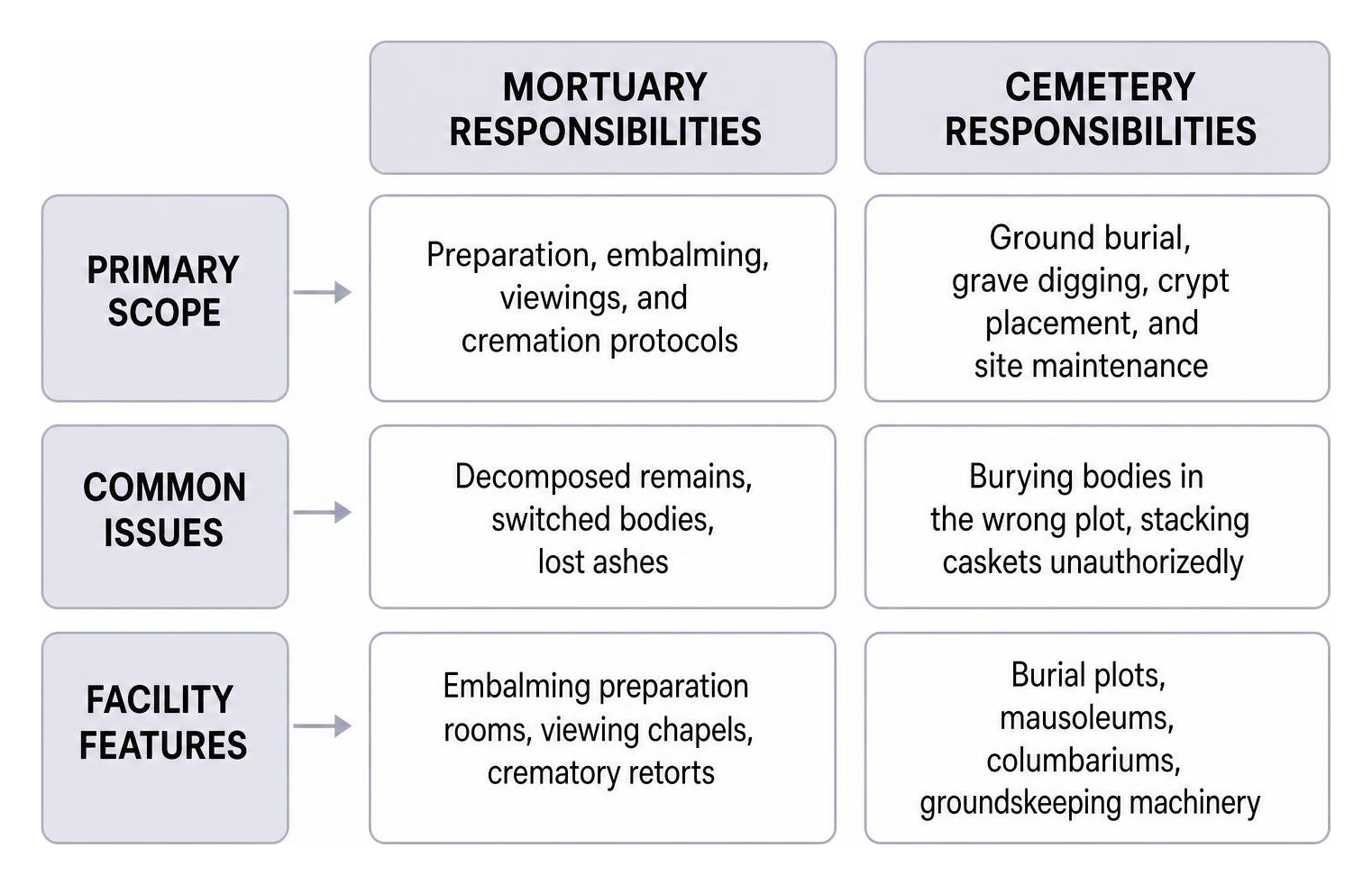
| Aspect | Funeral Home Negligence | Cemetery Negligence |
|---|---|---|
| Primary Scope | Preparation, embalming, viewings, and cremation protocols | Ground burial, grave digging, crypt placement, and site maintenance |
| Common Issues | Decomposed remains, switched bodies, lost ashes, dropped caskets | Burying bodies in the wrong plot, stacking caskets unauthorizedly |
| Facility Features | Embalming preparation rooms, viewing chapels, crematory retorts | Burial plots, mausoleums, columbariums, groundskeeping machinery |
| Physical Damage | Chemical burns from embalming, dropped remains during transport | Grave collapse, vault crushing due to heavy machinery, headstone damage |
| Governing Duties | Proper preservation, chain of custody, respectful presentation | Accurate plot mapping, perpetual ground care, structural vault integrity |
Cemetery negligence often involves disturbing gravesites, excavating adjacent plots without protecting existing vaults, or mismanaging cemetery maps. Knowing which entity caused the harm is essential when pursuing accountability.
Legal Rights, Standing, and State Regulations in Mortuary Claims

Death care providers are bound by strict statutory mandates governing hygiene, operational safety, and consumer transparency. State boards establish explicit standards for preparation rooms, casket display areas, and transportation equipment. When operators bypass these standards to cut overhead costs, families have statutory grounds to demand accountability.
Who Has Legal Standing to Sue a Funeral Home?
Not just anyone can file a lawsuit against a mortuary. The law establishes a statutory priority list to determine who holds legal standing to control final disposition and bring a tort claim:
- Surviving Spouse: The spouse holds primary authority to make decisions and initiate legal actions.
- Surviving Adult Children: If no spouse survives, the right passes collectively to the adult children.
- Surviving Parents: If the deceased had no spouse or children, the surviving parents hold standing.
- Surviving Siblings: Next in line if no closer kin exists.
- Estate Personal Representative: The court-appointed executor or administrator representing the estate can pursue financial damages, fee refunds, or property theft claims.
Statutory Deadlines and the Tort of Outrage Doctrine
Time is a critical factor in mortuary malpractice litigation. In most states, the statute of limitations for personal injury and professional negligence claims is generally two years from the date the negligent act occurred or was reasonably discovered.
Because physical injuries to surviving family members are rare in these cases, lawsuits frequently invoke the “tort of outrage” (intentional or reckless infliction of emotional distress). To succeed under this doctrine, the evidence must show that:
- The defendant’s conduct was intentional or reckless.
- The behavior was so outrageous, extreme, and indecent that it exceeded all acceptable societal bounds.
- The conduct directly caused severe, debilitating emotional distress to the family.
Proving these elements requires clear documentation, reliable witnesses, and a firm grasp of death care industry standards.
How to Find a Qualified Funeral Home Negligence Attorney Near Me
Finding an attorney who specializes in death care malpractice can feel overwhelming when you are actively grieving. Most personal injury lawyers handle auto collisions or workplace injuries, but mortuary litigation requires a different skill set.
When searching for a local advocate, focus on firms that specifically emphasize funeral, crematory, and cemetery malpractice. Review our team of experienced mortuary malpractice attorneys to see how focused death care experience shapes case outcomes.
Key Qualities to Look for in a Funeral Home Negligence Attorney Near Me
- Deep Familiarity with Mortuary Science: Your lawyer should understand embalming chemicals, crematory temperature regulations, and body preservation timelines.
- A Track Record with Complex Distress Cases: Look for proven results in high-stakes non-economic damage cases. Substantial recoveries—such as seven-figure settlements for denied viewings or eight-figure verdicts for gross mishandling—demonstrate that a firm knows how to present emotional harm to an insurer or jury.
- Contingency Fee Transparency: Reputable firms operate on a clear contingency fee basis (typically 33% to 40%), meaning you pay no upfront legal fees unless money is recovered for your case.
- Direct Attorney Communication: Ensure your case is handled directly by an experienced attorney rather than passed off entirely to junior staff or automated systems.
Questions to Ask When Consulting a Funeral Home Negligence Attorney Near Me
When you sit down for your initial consultation, ask direct questions:
- How many funeral home or cemetery negligence cases have you personally handled?
- Do you have access to independent mortuary science and crematory experts to review our evidence?
- How do you assess non-economic damages like grief and emotional trauma in this jurisdiction?
- What is your contingency fee percentage, and how are case costs handled if we do not win?
- Will you take this case to trial if the funeral home’s insurance carrier offers an inadequate settlement?
Types of Compensation and Damages Recoverable in Death Care Litigation

When a funeral provider commits malpractice, the law allows families to pursue several forms of financial recovery:
- Direct Economic Damages: Full or partial refunds of all fees paid to the funeral home, crematory, or cemetery under the breached contract.
- Corrective Service Costs: Expenses incurred to fix the provider’s errors, including hiring a new mortuary for re-embalming, purchasing a replacement casket, or paying exhumation and reburial fees.
- Severe Emotional Distress and Mental Anguish: Compensation for the psychological trauma, anxiety, clinical depression, and therapy expenses caused by discovering your loved one’s remains were mistreated.
- Loss of Final Farewell: Damages specifically tied to the profound harm of being denied the opportunity to view or say goodbye to a loved one due to preventable decomposition or improper handling.
- Punitive Damages: In instances of deliberate misconduct, gross negligence, or fraudulent cover-ups, courts may award punitive damages to punish the business and deter future violations across the death care industry.
The Legal Process: How Attorneys Investigate and Build Your Case
Holding a mortuary accountable involves a thorough, systematic approach. We take the burden of investigation off your shoulders so you can focus on healing:
- Initial Case Evaluation: We review your story, existing contracts, and timelines during a confidential free case consultation.
- Evidence Preservation: We send formal preservation letters to prevent the funeral home or cemetery from altering records, deleting security footage, or discarding physical evidence.
- Chain-of-Custody Auditing: We trace every logbook entry, refrigeration record, crematory retort temperature sheet, and transport manifest.
- Expert Mortuary Review: Independent morticians and forensic specialists review the case to provide objective testimony regarding industry standard breaches.
- Depositions and Discovery: We cross-examine funeral directors, crematory operators, and managers under oath to uncover procedural failures and cost-cutting practices.
- Settlement Negotiation and Trial: We present a detailed demand package to the facility’s insurer. If they refuse to offer a fair resolution, we bring the evidence before a jury.
Frequently Asked Questions About Funeral Home Negligence
If you have additional concerns about taking legal action, our frequently asked questions on funeral malpractice offer further insights.
How long do I have to file a funeral home negligence lawsuit?
In most jurisdictions, the statute of limitations is two years from the date the negligent act occurred or from the date you discovered the misconduct. Because physical evidence and employee memories fade quickly, consulting an attorney as soon as you suspect wrongdoing helps protect your rights.
What is the average cost to hire a mortuary malpractice lawyer?
You do not need to pay out-of-pocket legal fees to retain experienced representation. Most death care negligence attorneys work on a standard contingency fee structure (typically 33% to 40% of the gross recovery). You owe no attorney fees unless a successful settlement or court verdict is achieved.
Can I sue if a funeral home gave us the wrong ashes or body?
Yes. Giving a family the wrong body or commingled ashes represents a failure in the chain of custody and a breach of contract. These errors inflict severe emotional distress, giving you the right to pursue a claim for both economic costs and mental anguish.
Conclusion
Discovering that a funeral home or cemetery mistreated your loved one is a painful experience that compounds your grief. You do not have to carry that burden alone, and you do not have to accept corporate excuses for preventable negligence.
Holding negligent death care providers accountable provides closure for your family while establishing systemic deterrents that protect others in your community. If you suspect misconduct or negligence, reach out to our team at Funeral Malpractice Attorneys to explore dedicated funeral malpractice legal representation tailored to your family’s needs.