
What Cemetery Plot Ownership Laws Mean for Your Family
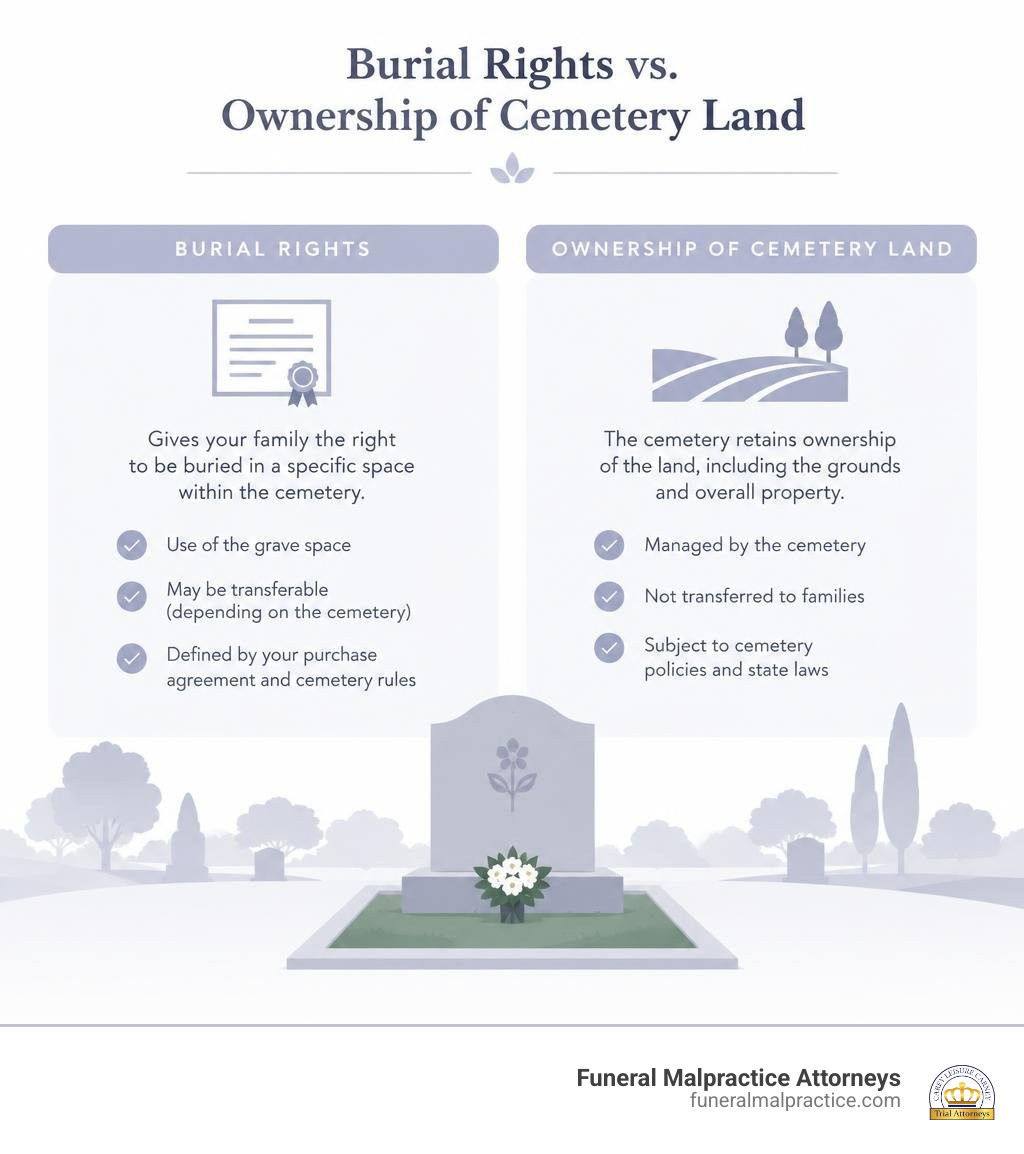
Buying a cemetery plot usually gives you the right to bury someone in a specific space, not ownership of the land itself. Cemetery plot ownership laws, your purchase agreement, and cemetery rules determine who may use that space, whether the burial right can be transferred, and what happens if it remains unused.
If a cemetery questions your family’s rights, start by asking for the purchase agreement, burial-right certificate, and the cemetery’s ownership records. Keep copies of any transfer or burial paperwork. These records can help you address a mistake before it affects burial plans.
I’m Tom Carey, a Florida legal professional who has served as a senior partner at a law firm in Pinellas County. I draw on that legal experience to explain cemetery plot ownership laws and the records families may need when questions arise.
Understanding Cemetery Plot Ownership Laws and Rights of Sepulture
When families purchase a final resting place, they often assume the transaction mirrors traditional real estate. In reality, modern cemetery operations function under specialized statutory frameworks designed to balance long-term land management with sacred family rights.
Right of Sepulture vs. Real Estate Title
Purchasing a grave does not convey fee simple title to the ground beneath your feet. Instead, you purchase what the law defines as a “right of sepulture”—an exclusive easement, license, or personal property privilege to inter human remains within a specifically designated lot or niche.
Because the cemetery company or municipality retains fee title to the land, your rights remain subject to the reasonable rules, bylaws, and regulations established by the cemetery authority. While you cannot build a structure, harvest timber, or lease the topsoil for commercial farming, your burial easement receives strong statutory protection against outside interference.
Statutes across various jurisdictions, such as the New Jersey Revised Statutes on interment space transfers, explicitly recognize that cemetery conveyances transfer these distinct burial and interment rights rather than traditional real property deeds. This distinction impacts everything from local property tax assessments to how ownership transfers upon death.
Associated Costs and Perpetual Care Trust Funds
A complete understanding of burial plot rights requires navigating the ancillary costs and maintenance mandates tied to cemetery operations:
- Perpetual Care Fees: Regulated cemeteries establish statutory trust funds dedicated to ongoing maintenance, including mowing, road upkeep, and general landscaping. Under oversight frameworks like the Maryland Office of Cemetery Oversight regulations, cemeteries must deposit a mandatory percentage of every plot sale—often 10% or more—into an irrevocable perpetual care fund.
- Opening and Closing Fees: Simply holding the burial right does not cover the physical labor of excavation, backfilling, and site restoration. Grave opening and closing fees usually run between about $1,500 and $2,300 depending on the cemetery, depth requirements, and whether the burial occurs on a weekend.
- Outer Burial Containers and Vaults: Many cemeteries mandate concrete or steel burial vaults to prevent ground settling, even though state laws rarely mandate them for public health reasons.
- Memorial and Marker Installation Fees: Setting headstones, bronze markers, or granite monuments often incurs separate foundation and administrative charges regulated by cemetery bylaws.
When facilities fail to maintain trust accounts, neglect grounds, or charge unauthorized fees during moments of grief, their conduct may cross into actionable cemetery malpractice.
Transferring, Selling, and Inheriting Burial Plots
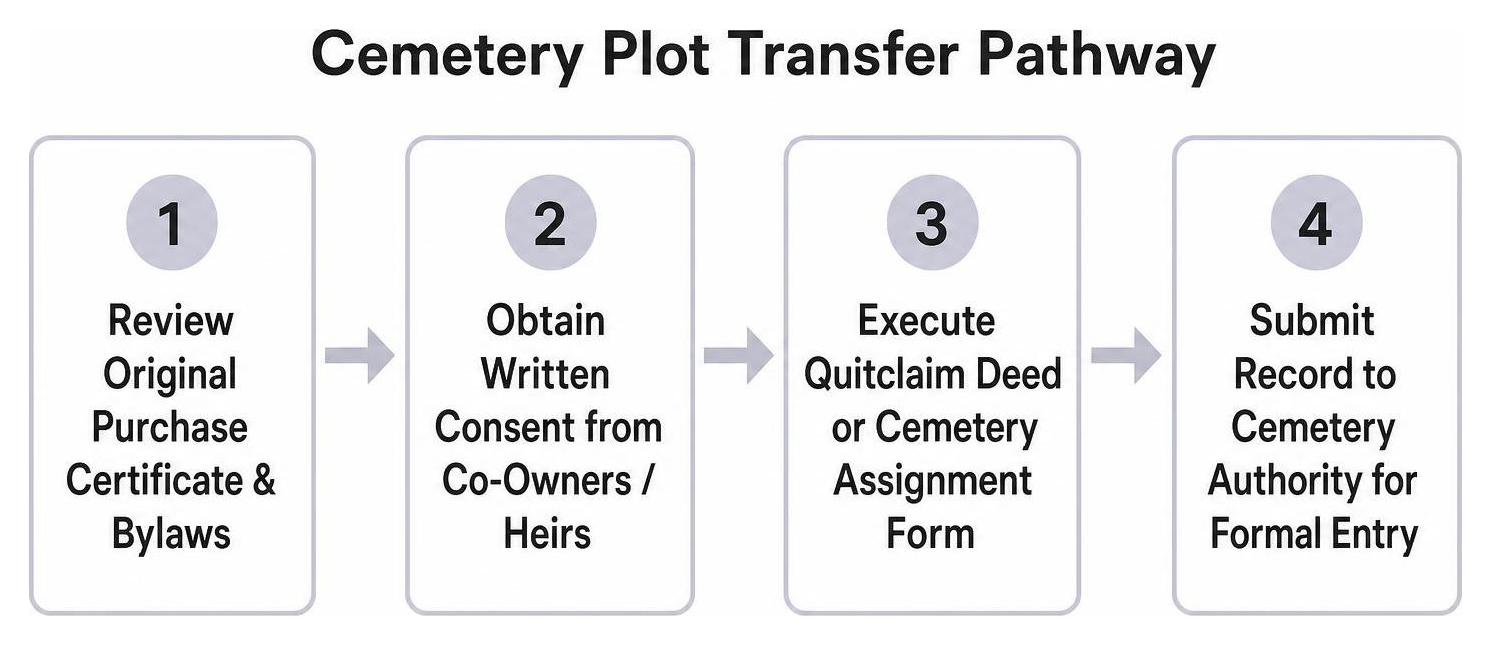
Cemetery plots often remain in families across multiple generations. However, because burial plots are governed by specific administrative and probate rules, moving ownership between individuals requires strict adherence to formal protocols.
How Estate Planning Interacts with Cemetery Plot Ownership Laws
If you hold unused interment rights, addressing them directly in your estate plan prevents administrative gridlock. When an owner passes away without specifically devising their plots in a valid will, ownership passes through intestate succession or statutory hierarchies rather than general residuary clauses.
Statutory structures such as the Louisiana title and rights in cemetery spaces establish that co-owners hold vested rights that cannot be alienated without unanimous written consent. Surviving spouses typically retain an automatic, vested right of sepulture in any family plot purchased during the marriage. To ensure your intentions are respected and avoid disputes, you can review helpful resources for estate and burial planning that explain how burial instructions integrate with comprehensive wills and trusts.
Conveyance Procedures and Resale Restrictions
Selling or gifting an unused plot during your lifetime involves specific administrative steps:
- Verify Cemetery Resale Policies: Some cemeteries retain a right of first refusal to buy back unused spaces at original purchase prices or require administrative review before private sales.
- Execute Proper Transfer Documents: Transfers are completed using a cemetery-approved deed of assignment or quitclaim form rather than standard residential warranty deeds.
- Comply with State Resale Codes: Under statutory provisions like Texas Health and Safety Code on cemetery plot sales, cemeteries must officially record conveyances in their permanent books and issue an updated certificate of ownership signed by authorized officers.
- Pay Administrative Recordation Fees: Municipalities and private cemeteries frequently charge nominal recording fees (often ranging from $25 to $150) to update their master burial registries.
Reviewing municipal guidance on transferring grave ownership shows that without formal cemetery registration, unrecorded private transfers remain legally unenforceable against third parties.
Abandonment, Inactivity, and Cemetery Plot Reclaim Rules
One of the most surprising aspects of cemetery plot ownership laws is that unused burial rights do not always last forever. As urban burial space becomes scarce and cemeteries face perpetual maintenance obligations, state legislatures have enacted abandonment and reclamation statutes.
State-by-State Differences in Cemetery Plot Ownership Laws
When a plot owner purchases grave spaces and then disappears for decades without paying maintenance assessments or communicating with the sexton, cemeteries can initiate formal reversion proceedings.
| State | Statutory Non-Use Threshold | Notice & Due Process Requirements | Typical Outcome |
|---|---|---|---|
| Illinois | 50 Years | Certified mailing to last known address, published public notices | Rights deemed abandoned; cemetery may resell unused spaces |
| Utah | 60 Years | Extensive search for heirs, municipal board publication | Reversion to municipal or private cemetery authority |
| Texas | 10 Years | Failure to pay assessments plus 10 years of total non-use | Cemetery organization may petition for reclamation |
| Maryland | No General Resale | Owners hold rights indefinitely unless private contract stipulates otherwise | Spaces remain with owner; cemetery cannot automatically reclaim |
As noted in scholarly legal analysis of grave plot ownership claims, modern genealogy research—a global market projected to reach over $12 billion between 2019 and 2029—frequently uncovers forgotten ancestral plots, sparking ownership clashes between distant descendants and cemetery boards attempting to clear inactive inventory.

Renewable Leases and Private Family Cemetery Regulations
In response to land constraints, some modern burial spaces and natural green burial parks utilize renewable leasehold models rather than perpetual easements. In these arrangements, a family secures exclusive burial rights for a set duration (typically 25 to 75 years). If descendants do not renew the lease, the site may be rotated for future ecological burials.
For historic private family burial grounds situated on rural private land, statutory protections ensure that even when surrounding real estate is sold, descendants retain reasonable ingress and egress easements to visit, maintain, and honor ancestral graves. In states like Maryland, damaging or desecrating historic burial grounds carries severe criminal penalties, including fines up to $10,000 and up to five years in prison.
Resolving Burial Space Disputes and Cemetery Negligence
Grave ownership disputes often arise during deeply vulnerable moments. When cemetery operators misplace paper maps, fail to modernize digital records, or prioritize profits over care, serious legal violations occur.
Double-Sold Plots, Disinterment, and Cemetery Malpractice
Among the most traumatic cemetery errors is discovering that a stranger has been buried in your family’s pre-purchased plot. Discrepancies between historical cemetery maps and real-world ground conditions can result in overlapping burial assignments.
When operators discover an error, they sometimes attempt clandestine, unauthorized disinterments to move remains without obtaining proper court orders or family consent. These reckless acts violate basic consumer protection standards and constitute severe grounds for funeral and cemetery claims. Our team routinely sees how institutional disorganization leads to actionable funeral malpractice that leaves families with lasting emotional trauma.
Legal Remedies and Enforcing Burial Rights
Families facing cemetery errors or breaches of contract have distinct legal avenues to enforce their rights:
- Injunctive Relief: Emergency court orders preventing a cemetery from burying an unauthorized individual in a disputed plot or halting unlawful excavations.
- Specific Performance or Equivalent Substitution: Requiring the cemetery to provide an equivalent, premium lot alongside full reimbursement of administrative expenses.
- Damages for Intentional or Negligent Infliction of Emotional Distress: Financial recovery for the profound psychological anguish caused by grave desecration or lost remains.
- Statutory Consumer Protection Penalties: Civil damages and attorney fee awards when facilities violate state cemetery licensing and trust fund regulations.
When cemeteries refuse to acknowledge their mistakes or attempt to force families into unacceptable compromises, consulting dedicated attorneys ensures your loved ones’ resting places are fiercely defended.
Frequently Asked Questions About Cemetery Plot Ownership
Can a cemetery reclaim and resell your plot if it remains unused?
Yes, but only if specific state statutory abandonment laws or contractual leasehold terms permit it. In jurisdictions with abandonment statutes, cemeteries cannot simply take a plot back on a whim. They must demonstrate decades of non-use, conduct exhaustive searches for living heirs, send certified notices, and publish legal notices in local newspapers before a court or regulatory board grants reclamation. You can find further details in our cemetery law FAQ.
What happens to a cemetery plot when the owner dies without a will?
When an owner dies intestate, unused burial plots do not vanish into probate limbo. State laws generally assign ownership directly to the surviving spouse first, followed by the deceased’s children and direct lineal descendants as co-owners. All co-owners hold equal rights to be interred in any remaining spaces, but none can sell or convey the plot to an outside third party without the signed concurrence of every living heir.
Can creditors seize a cemetery plot to satisfy unpaid debts?
No. Under long-standing statutory protections and public policy doctrines across nearly every state (such as Md. Code, Business Regulation § 5-503), burial lots and crypts held in good faith for human interment are completely exempt from creditor execution, bankruptcy estate liquidations, judgment liens, and state inheritance taxes. The law treats final resting places as sacred grounds beyond the reach of debt collectors.
Conclusion
Understanding cemetery plot ownership laws empowers families to protect their burial rights, avoid administrative delays during probate, and ensure their final wishes are honored. Because purchasing a plot grants an easement of sepulture rather than land title, maintaining original purchase certificates, updating cemetery records when you move, and clearly referencing burial plots in your estate planning documents are essential steps.
When cemetery operators mismanage records, double-sell family plots, or desecrate graves, families do not have to face the fallout alone. We are committed to holding negligent cemeteries accountable and helping grieving families achieve justice, restoration, and peace of mind.