How to Start a Cremation Negligence Claim in Clearwater
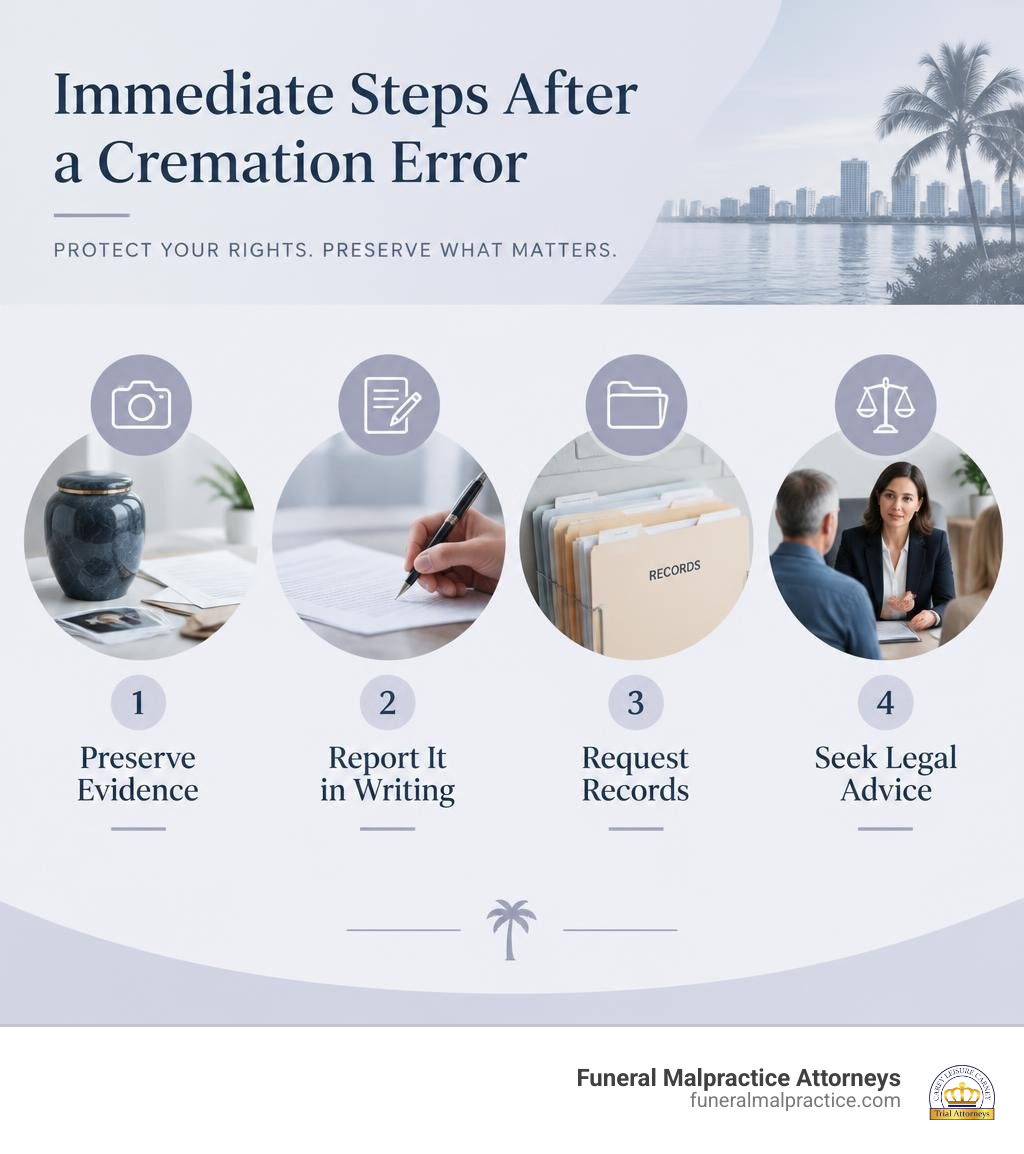
If a Clearwater crematory loses your loved one’s remains or returns the wrong ashes, save the urn, paperwork, receipts, and messages. Report the error to the provider in writing and ask for its identification and chain-of-custody records. Then speak with a funeral malpractice attorney about who can file a cremation negligence claim in Clearwater and which deadlines apply. A cremation error after death is not, by itself, a wrongful death claim.
You do not need to know exactly what went wrong before asking for help. Preserving what you have now can make it easier to find out.
I’m Tom Carey, a Florida legal professional who has served as a senior partner in Pinellas County. I bring that local experience to helping families pursue a cremation negligence claim in Clearwater.
Understanding Crematory Errors and Mortuary Malpractice in Pinellas County

When we entrust a mortuary or crematory with the body of someone we cherish, we expect dignity, solemnity, and strict adherence to protocol. Unfortunately, administrative shortcuts, understaffing, and careless operational procedures lead to heartbreaking errors across Pinellas County. Cremation negligence occurs when a facility fails to exercise the standard of care expected of licensed death-care professionals, directly resulting in lost remains, commingled ashes, or unauthorized disposition.
In Florida, crematories and funeral directors are strictly regulated. They owe surviving relatives a duty to handle human remains with reverent care. When that duty is breached, families are left to shoulder overwhelming grief. Understanding the grounds for funeral malpractice claims allows you to determine whether a mortuary’s mishandling amounts to actionable civil negligence or contract breach under Florida law.
Common Types of Crematory Mishandling and Negligence
Crematory mistakes can range from minor administrative oversights to egregious breaches of conduct. The most frequent issues we see include:
- Commingling of Remains: Failing to properly clear the cremation retort between cycles, causing the ashes of multiple individuals to mix.
- Loss or Misplacement of Ashes: Misfiling storage containers, transferring cremains to third-party couriers without tracking, or scattering ashes in unauthorized locations.
- Mislabeled Urns and Identification Failures: Detaching or swapping metal ID discs, resulting in one family receiving another stranger’s ashes.
- Failure to Remove Medical Devices: Overlooking pacemakers or internal defibrillators prior to cremation, which can explode under extreme heat, destroy remains, and damage equipment.
- Unreturned Personal Items: Overlooking instructions to remove keepsakes. As seen in legal guidance on unreturned personal items and jewelry, failing to remove family heirlooms such as wedding bands before cremation constitutes clear negligence, allowing families to pursue property conversion or small claims damages.
- Unauthorized Cremation: Performing the procedure without verified written consent from the authorized next of kin under Florida probate priorities.
Common Indicators Supporting a Cremation Negligence Claim in Clearwater
Many families initially suspect an issue due to discrepancies that the mortuary dismisses as standard variation. However, distinct red flags often suggest malpractice:
- Unusual Ash Weight: In adult humans, cremains typically weigh between 3 to 7 pounds depending on skeletal structure and height. Significant deviations can indicate incomplete processing or commingled ashes.
- Delayed Delivery Without Justification: Unexplained multi-week delays often happen when a facility is frantically attempting to trace misplaced remains.
- Inconsistent Paperwork: Mismatched names, incorrect retort chamber numbers, or missing identification tags on custody forms.
- Sudden Staff Admissions: Staff members offering vague apologies or contradicting previous statements regarding the timeline of the cremation.
Applying effective litigation strategies for remains mishandling helps uncover hidden records, maintenance logs, and surveillance video before facilities can conceal their errors.
Legal Framework for a Cremation Negligence Claim Clearwater Families Can Pursue

Pursuing accountability in Pinellas County courts requires selecting the appropriate legal theory. While fatal incidents caused by medical errors or accidents fall squarely under the Florida Wrongful Death Act, post-mortem errors are usually litigated under tort law (negligence and intentional infliction of emotional distress) and contract law (breach of contract).
Under Florida law, mortuary contracts carry an implied covenant to provide dignified treatment of the deceased. When a crematory mishandles remains, this breach allows families to hold service providers accountable while helping protect grieving families from mortuary exploitation throughout Clearwater.
Who Has Legal Standing to Sue for Mishandled Remains in Florida?
Florida law establishes a strict hierarchy regarding who holds “quasi-property rights” over a deceased person’s body and the legal right to direct its disposition. Standing generally extends to:
- The designated personal representative of the estate.
- The surviving spouse.
- Adult children, followed by parents and lineal descendants.
- The contracting party who signed the service agreement.
Courts examine whether claimants qualify as direct parties or intended third-party beneficiaries of the mortuary contract. For instance, in the widely cited Levy v. Only Cremations for Pets, Inc. case law, the appellate court emphasized that entities holding themselves out as offering dignified services can be held liable to foreseeable beneficiaries who experience profound emotional harm when that trust is violated.
Available Damages: Economic, Non-Economic, and Mental Anguish
Families filing a cremation negligence claim in Clearwater can seek several forms of monetary compensation depending on the nature and severity of the facility’s misconduct:
| Category | Description | Common Examples |
|---|---|---|
| Economic Damages | Direct financial losses sustained by the estate or surviving family. | Funeral and cremation fees, costs of independent DNA or ash analysis, replacement value of lost jewelry, urn replacement. |
| Non-Economic Damages | Compensation for intangible personal and psychological harm. | Severe emotional distress, mental anguish, loss of peace of mind, depression, and therapy costs. |
| Punitive Damages | Additional damages awarded to punish gross negligence or intentional fraud. | Cases involving intentional commingling, widespread body abandonment, or deliberate concealment of lost remains. |
Step-by-Step Guide to Taking Legal Action Against a Negligent Crematory
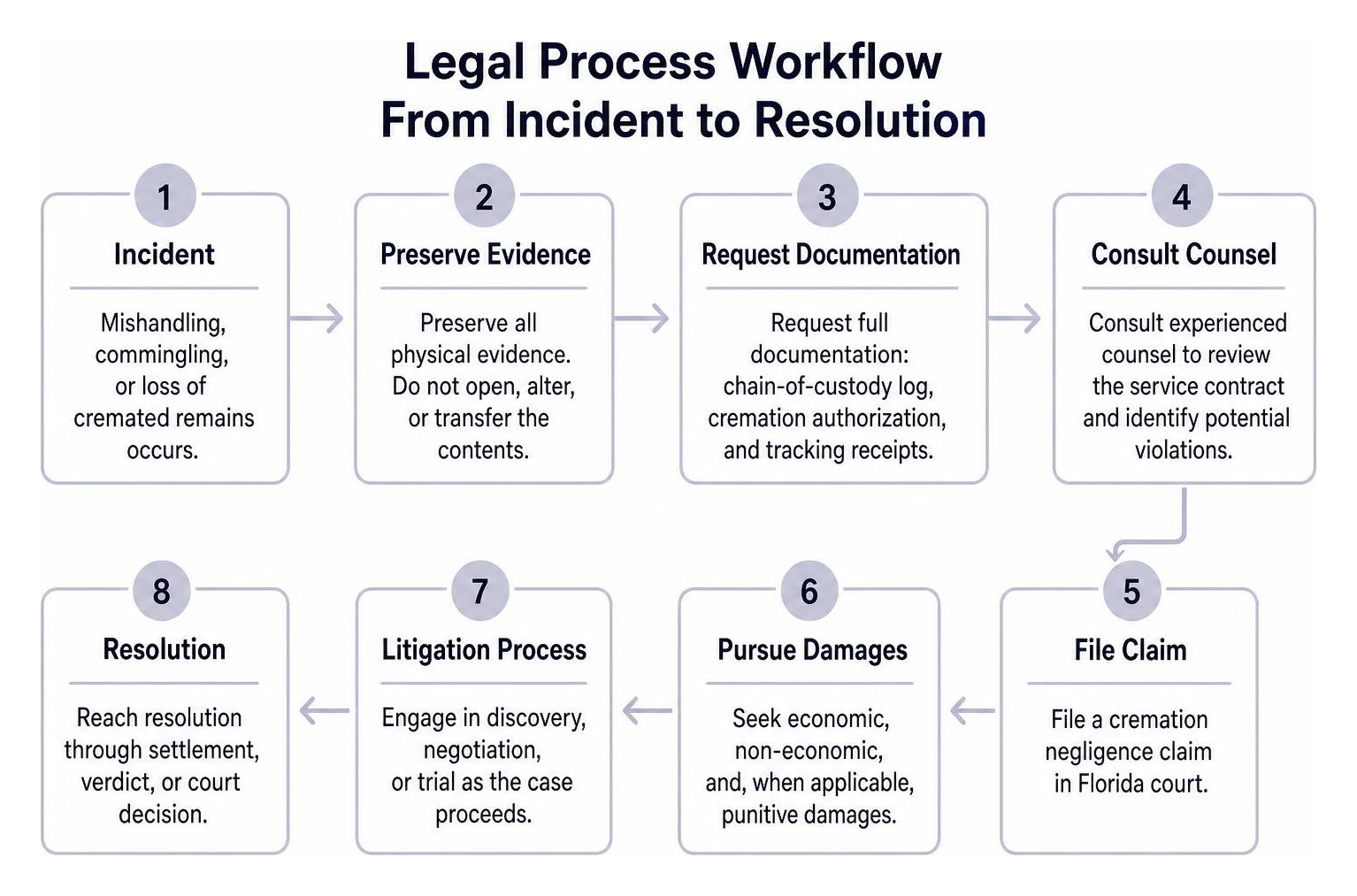
When taking legal action against a crematory, following a structured process helps protect your legal rights:
- Preserve All Physical Evidence: Do not open, alter, or transfer the contents of the urn or temporary container provided by the facility.
- Request Full Documentation: Ask for the complete chain-of-custody log, cremation authorization, and internal tracking receipts in writing.
- Consult Experienced Counsel: Have a qualified funeral malpractice attorney review the service contract and identify potential violations of Florida regulations.
- Send a Formal Spoliation Notice: Your attorney will issue a formal demand requiring the crematory to preserve all electronic records, video footage, and retort temperature logs.
- File the Civil Complaint: If pre-suit settlement negotiations fail, a formal complaint is filed in the Pinellas County Sixth Judicial Circuit Court.
- Discovery & Expert Analysis: Both sides gather evidence, depose crematory operators, and engage forensic experts to analyze the remains.
Key Evidence Needed for a Cremation Negligence Claim Clearwater Courts Will Uphold
To establish negligence in court, our legal team collects several key pieces of documentation:
- Chain of Custody Logs: Tracking each transfer of the body from the place of death to the retort.
- Cremation Authorization Forms: Confirming exact family instructions and personal item directives.
- Weight Analysis & Lab Testing: Comparing returned ash volume and chemical composition to expected human baseline averages.
- Equipment Maintenance Records: Checking crematory burn temperatures, filter cleanouts, and chamber repair histories.
- Witness Testimony & Expert Opinions: Sworn statements from forensic specialists and experienced funeral directors detailing standard industry practices.
Strict Deadlines: Navigating the Florida Statute of Limitations
Timing is critical when bringing a claim in Pinellas County. As of November 2026, Florida enforces strict filing deadlines depending on the specific legal theory:
- Wrongful Death Claims: If the negligence caused the death itself, the family has two years from the date of death to file suit.
- Negligence & Tort Claims: General personal injury and tort claims alleging emotional distress or property damage generally follow a statutory period of two years.
- Breach of Written Contract: Claims founded on a written mortuary service agreement typically carry a five-year statute of limitations.
Failing to file your claim before these statutory periods expire will permanently bar your right to recover damages.
Frequently Asked Questions About Cremation Negligence in Clearwater
What should I do immediately if a crematory loses or mixes up my loved one’s ashes?
Secure the urn and all packaging immediately in a safe, undisturbed location. Keep all original receipts, contracts, and email or text communications. Submit a formal written request to the crematory for all chain-of-custody logs, and avoid signing any release or settlement waivers until you have spoken with a qualified attorney.
How long do surviving families have to file a claim in Florida?
While contract disputes may allow up to five years, tort and negligence claims involving personal harm or emotional distress are subject to a strict two-year statute of limitations in Florida. You should begin investigating the claim immediately to ensure no deadlines are missed.
Can our family recover damages for emotional distress without physical impact in Florida?
Yes. Although Florida generally adheres to the “impact rule” (requiring physical injury to claim emotional damages), courts recognize clear exceptions for cases involving the negligent mishandling of dead human remains and intentional infliction of emotional distress arising from mortuary malpractice.
Conclusion
Losing a loved one is difficult enough without having to endure the trauma of a negligent cremation. When service providers fail to follow essential safety and tracking protocols, they must be held accountable for the emotional harm they inflict on grieving families.
Our team at Funeral Malpractice Attorneys is dedicated to providing Clearwater families with compassionate, focused representation. If you suspect your loved one’s remains were lost, mixed, or mistreated by a local crematory, contact us for a free, confidential case evaluation. Explore our specialized funeral malpractice representation to learn how we can help your family find answers and secure justice.