
Do Cremation Ashes Get Mixed Up? Check the Chain of Custody
If you wonder, “do cremation ashes get mixed up,” the honest answer is yes, mistakes are possible. A crematory should cremate one person at a time, keep their identification with their remains, and check the label before returning the ashes. Tiny traces from an earlier cremation may remain despite cleaning; that is different from giving a family the wrong remains.
For peace of mind, ask for the cremation record and check that the name and identification number match the container you receive. If they do not match, keep the paperwork and ask the crematory for a written explanation before moving or scattering the ashes.
I’m Tom Carey, a Florida-based legal professional who has served as a senior partner in Pinellas County. When families ask “do cremation ashes get mixed up,” I believe the place to start is the chain-of-custody record: who handled the remains, when, and under which ID.
Cremation has become the standard choice for final disposition across the United States. Back in the 1950s, only about 4% of deaths involved cremation. As of November 2026, cremation rates exceed 60%, with projections climbing toward 80% over the next decade. Cremation costs typically range from $2,000 to $7,000, offering an accessible alternative to traditional burials that routinely exceed $15,000.
Yet as cremation volumes soar, so do valid consumer anxieties. When you hand over the physical body of someone you love, you place immense trust in a facility operating behind closed doors. Understanding how professional crematories manage remains—and knowing when standard operations cross the line into actionable negligence—is vital for protecting your peace of mind and your family’s legal rights.
Do Cremation Ashes Get Mixed Up During the Cremation Process?
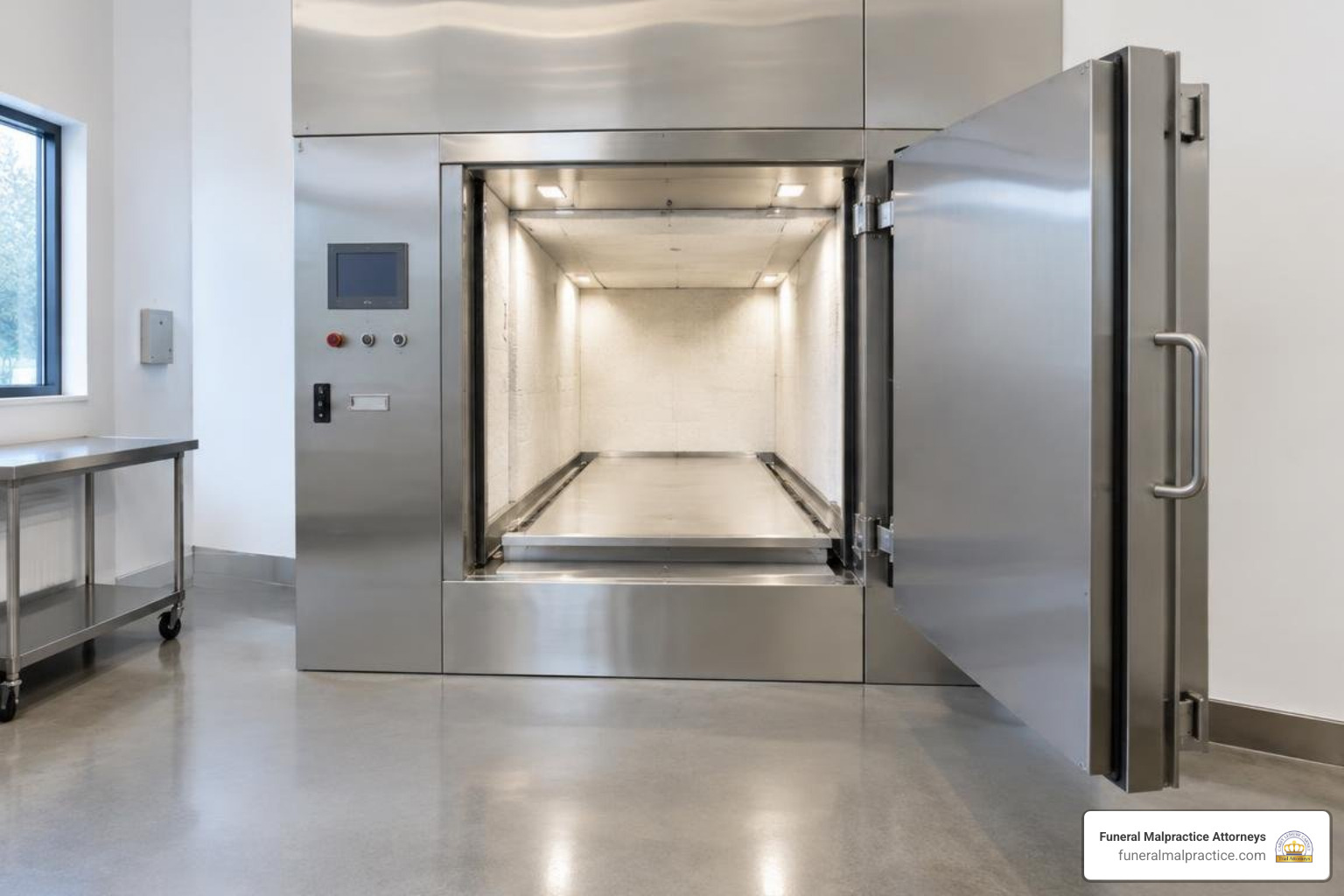
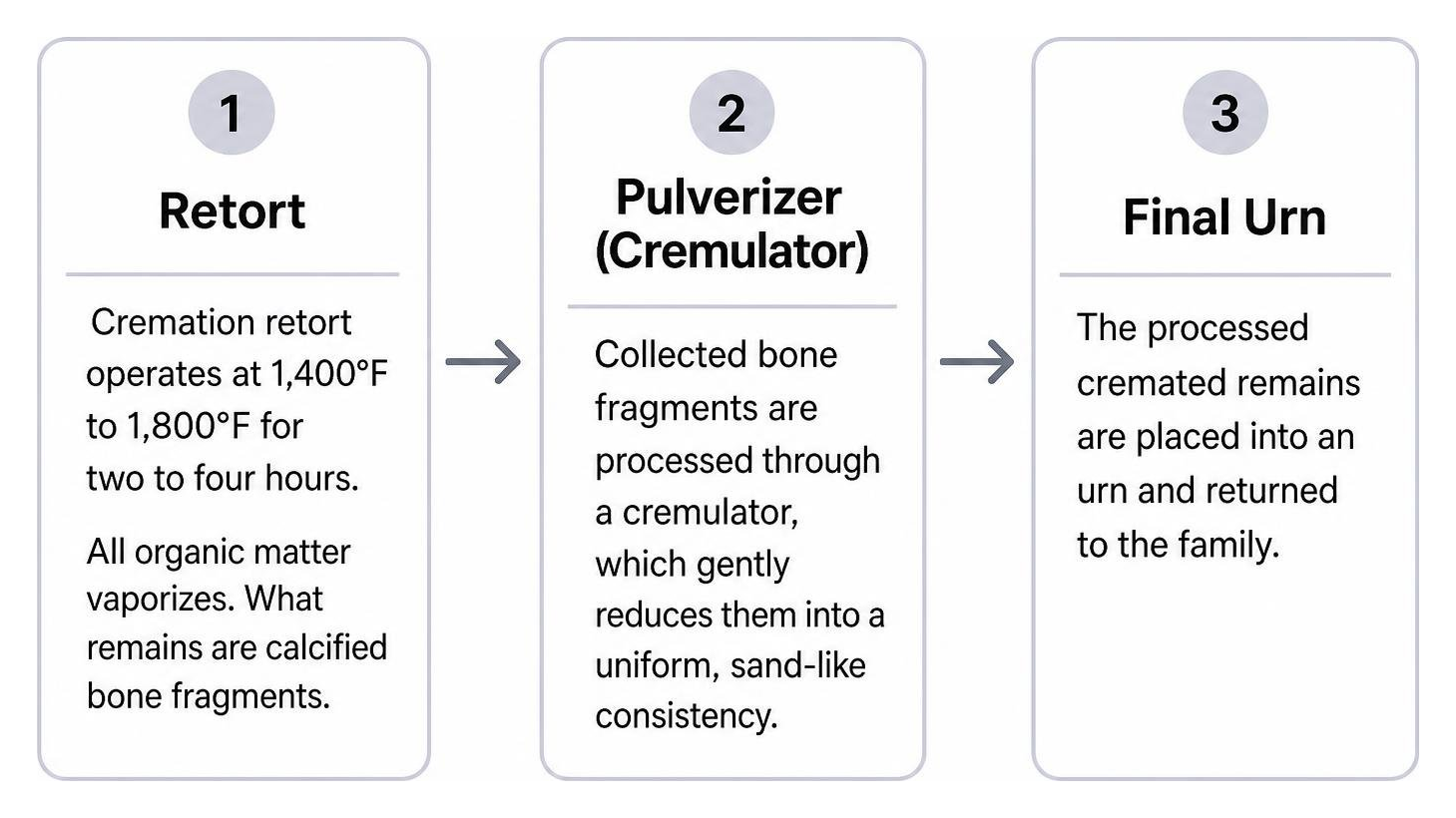
To understand whether human remains get commingled, we first need to demystify what happens inside the cremation chamber (also called a retort). A cremation retort operates at extreme temperatures ranging from 1,400°F to 1,800°F (760°C to 1,090°C) for two to four hours.
During this intense thermal cycle, all organic matter, soft tissues, fluids, and clothing completely vaporize. What remains on the chamber floor are not soft campfire ashes, but calcified bone fragments. These fragments consist almost entirely of inorganic bone mineral: roughly 47% calcium phosphate and 25% calcium, along with other trace minerals.
Under standard legal and ethical operations, cremation retorts are designed and sized to hold only one adult body at a time. Once the heat cycle finishes and the retort cools sufficiently, an operator sweeps, vacuums, and clears the chamber floor. The collected bone fragments are then processed through a mechanical cremulator, which gently reduces the calcified bone into a uniform, sand-like consistency before it is placed into an urn.
Why Trace Residue Remains in the Retort
Families often ask whether it is chemically possible for returned cremains to be 100% pure. In practical engineering terms, microscopic cross-contact is an unavoidable physical reality of industrial equipment, but it is distinct from negligent mixing.
The interior of a cremation chamber is lined with porous, refractory brick. Because this masonry surface is uneven and exposed to severe thermal stress, microscopic particles of bone mineral and soot can settle into fine crevices. Even the most meticulous manual sweeping and mechanical vacuuming cannot pull out every microscopic atom from porous brick.
Because of this physical reality, industry experts acknowledge that returned cremains are approximately 99.99% pure to the individual. Legitimate funeral authorities and official regulatory guidelines for crematory operations recognize that microscopic trace residue does not constitute wrongful commingling or legal malpractice, provided standard single-body protocols and thorough physical chamber cleanouts are strictly maintained.
How Do Cremation Ashes Get Mixed Up Through Human Negligence?
While microscopic masonry residue is harmless and legally acceptable, significant ash mixing happens when facilities cut corners, ignore safety standards, or allow staff to bypass established protocols.
True commingling happens when operators attempt “batch processing”—placing multiple deceased individuals into a chamber simultaneously to save fuel or time—or fail to perform standard chamber sweepings between cycles. In severe cases, careless staff mislabel temporary storage boxes, transfer the wrong cremains into customer urns, or subcontract cremations out to third-party mass processors without tracking logs. Such reckless behavior moves far beyond minor operational errors and enters the territory of mortuary exploitation and handling schemes.
Chain of Custody Safeguards: How Crematories Prevent Mixed Remains
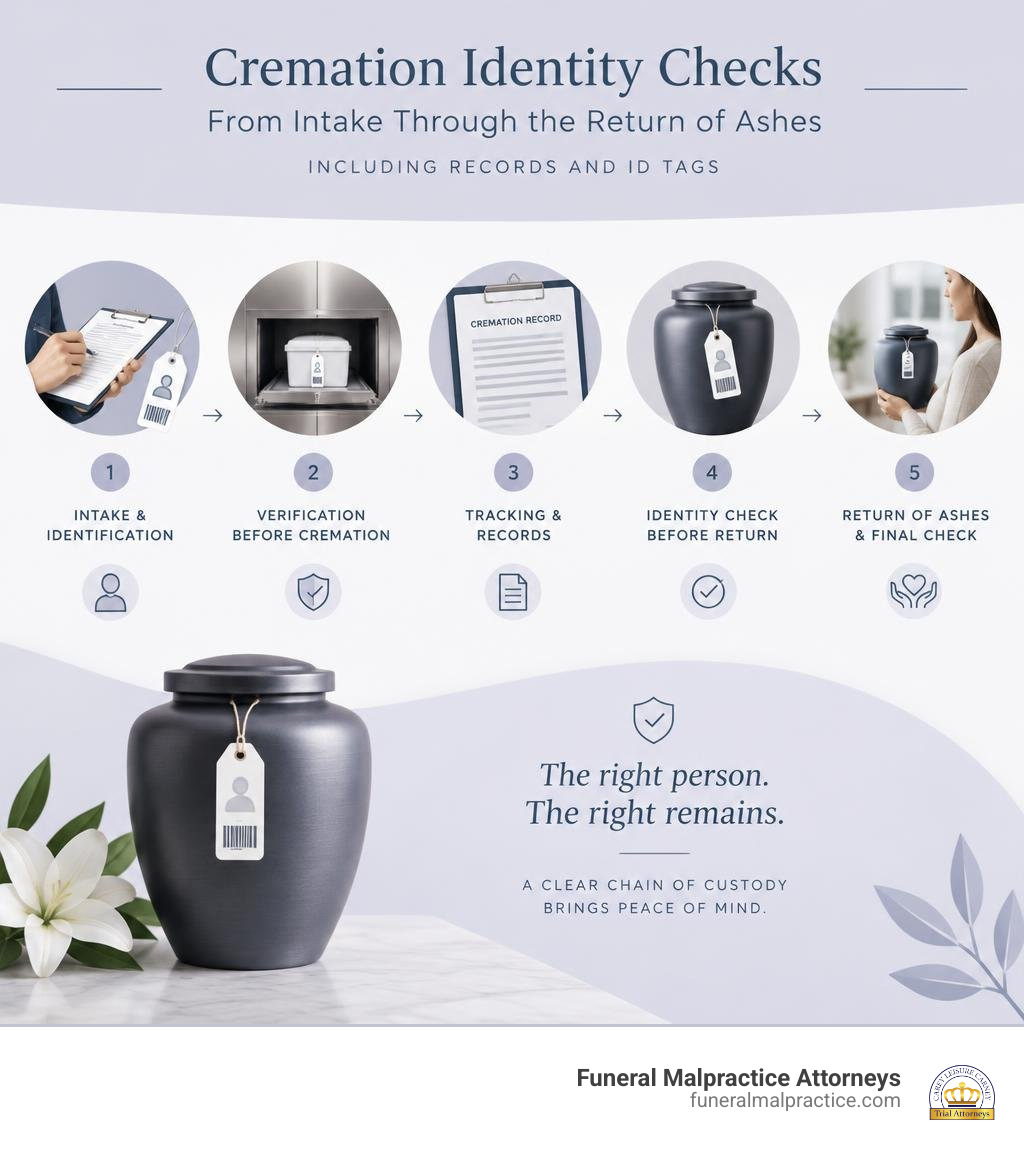
A rigorous chain of custody is the backbone of proper mortuary operations. From the moment a provider takes custody of a deceased individual at a hospital, hospice, or private residence, a meticulous paper and digital trail must document every transfer, movement, and physical procedure.
Metal Identification Tags and Digital Tracking
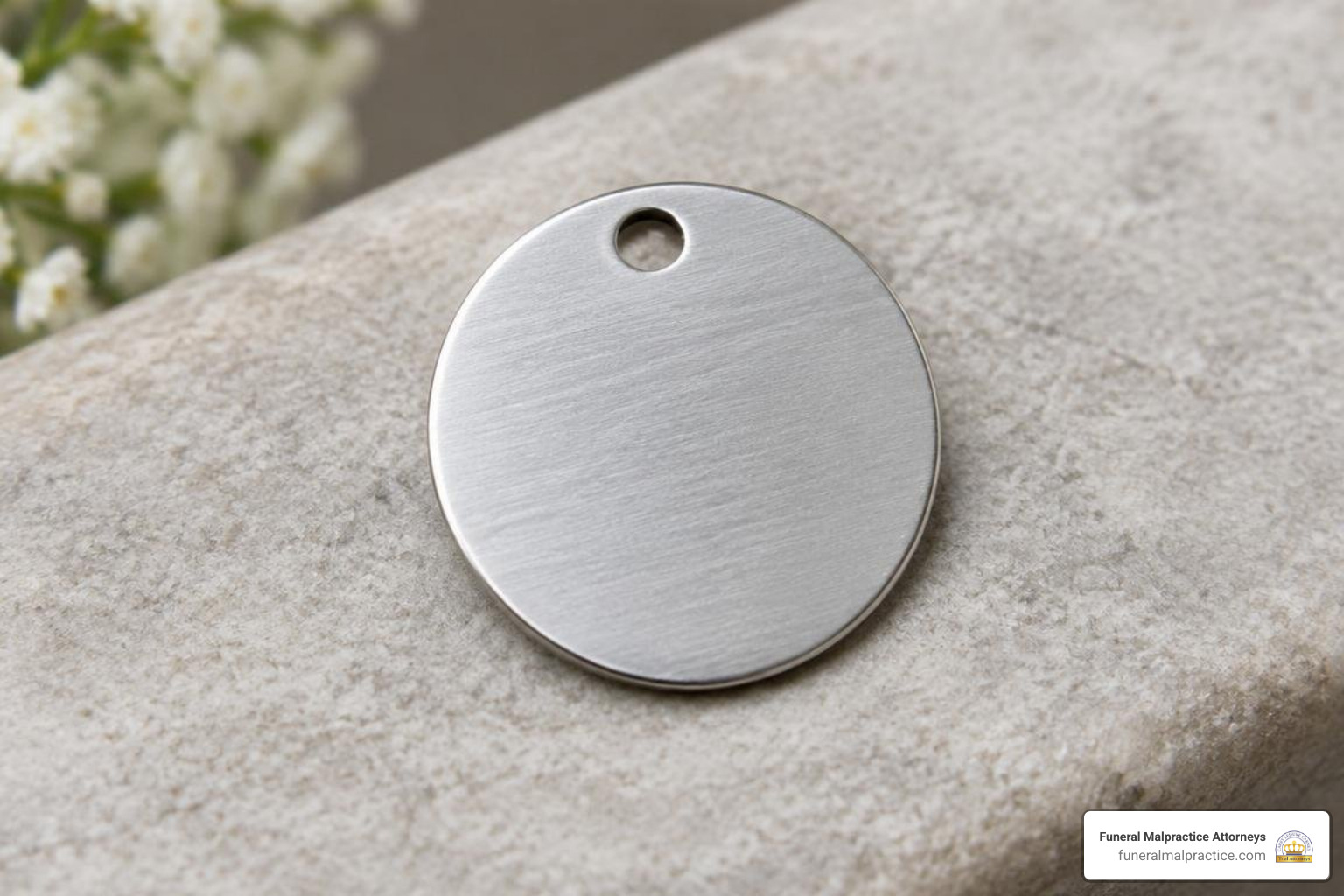
The single most critical safeguard against accidental mix-ups is the heat-resistant stainless steel identification disc. When a body arrives at the facility:
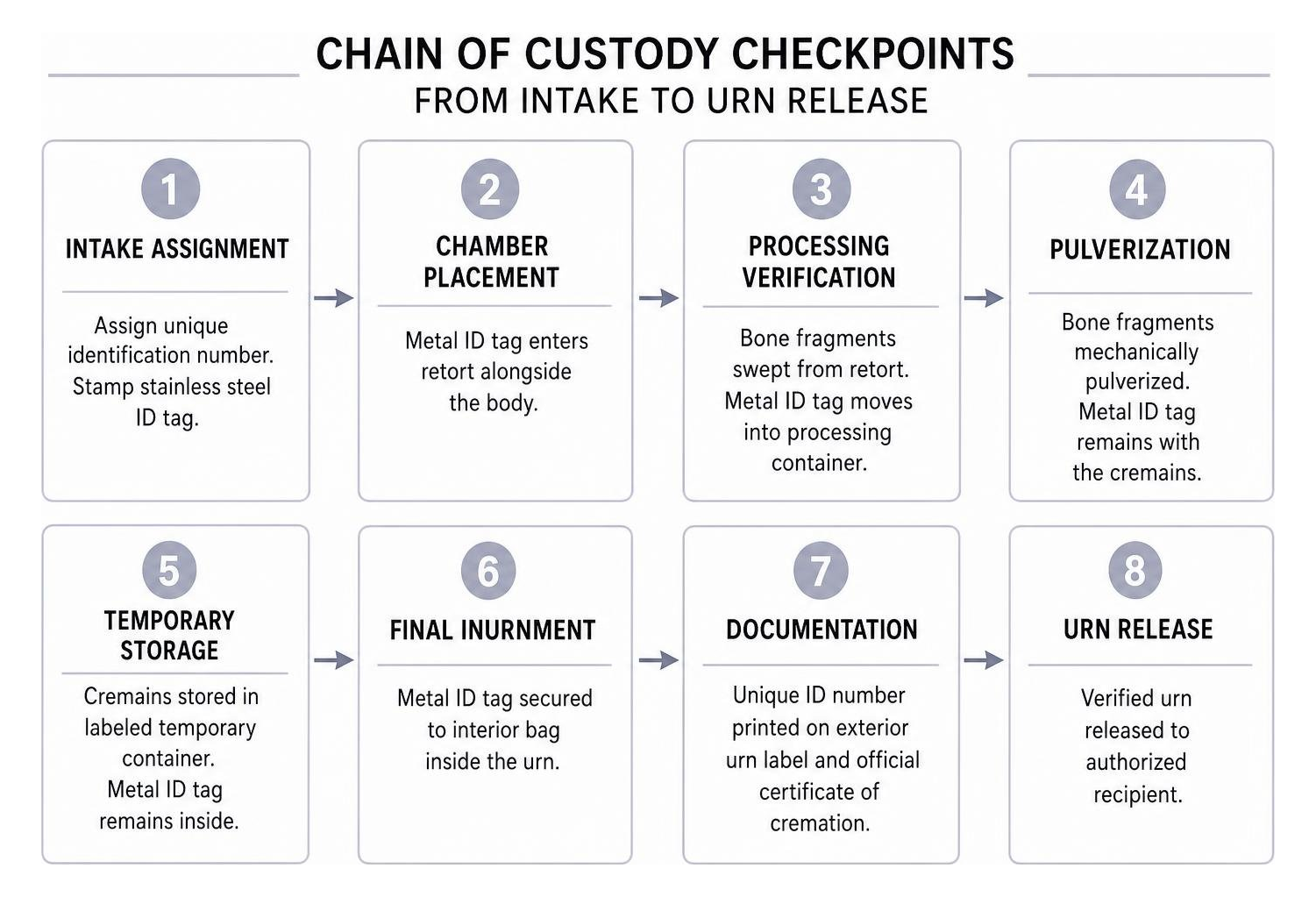
- Intake Assignment: Staff assigns a unique identification number recorded in the master crematory registry and stamps it onto a durable stainless-steel tag.
- Chamber Placement: The metal disc enters the retort alongside the body. Because stainless steel easily survives 1,800°F temperatures without melting, the tag stays with the remains throughout the entire combustion phase.
- Processing Verification: When bone fragments are swept from the retort and moved into the mechanical pulverizer, the metal disc travels inside the processing container.
- Final Inurnment: After pulverization, the disc is secured directly to the interior bag inside the urn, and the unique ID number is printed on the exterior label and official certificate of cremation.
Understanding cremation ID tags and chain of custody tracking allows families to verify that every stage of handling is backed by redundant physical identifiers.
High-Volume vs. Low-Volume Crematories: Operational Risk Factors
Not all crematory facilities manage identical workloads. Understanding the difference between high-volume commercial centers and low-volume local providers helps highlight operational risk points:
| Operational Feature | High-Volume Industrial Crematories | Low-Volume Local Crematories |
|---|---|---|
| Daily Throughput | Up to 15–30 bodies per day across multiple retorts | 1–3 bodies per day per chamber |
| Cool-Down Windows | Rapid, tightly scheduled cooling cycles | Extended natural cool-down intervals |
| Cleaning Thoroughness | Higher risk of rushed chamber sweeping | Detailed, unhurried manual cleanouts |
| Handling Logistics | Frequent off-site transfers and batch staging | Direct, on-site end-to-end custody |
| Primary Risk Point | Logistical labeling mix-ups during peak volume | Equipment failure or manual registry oversights |
While high-volume crematories can operate safely with advanced barcode scanners and computerized tracking, high daily turnover inevitably increases the risk of human error when staff face crushing workloads.
How to Verify the Identity of Cremated Remains
When an urn is returned, families should feel confident that the cremains inside belong exclusively to their loved one. You can use several practical methods to confirm the identity and integrity of the ashes you receive.
First, examine the paperwork. The unique identification number stamped on the stainless-steel disc inside the urn must match:
- The official Certificate of Cremation issued by the licensed crematory.
- The outer container label and custody transfer receipt.
- The crematory’s permanent master logbook.
Second, consider the physical weight of the remains. An average adult’s cremains account for approximately 3.5% of their original body weight, converting to roughly 200 cubic inches of volume (about the size of a standard five-pound bag of flour):
- Adult Males: Typically yield between 4 and 8 pounds of cremated remains, depending on height and skeletal density.
- Adult Females: Typically yield between 2 and 6 pounds of cremated remains.
Because cremains consist strictly of non-combustible bone mineral, soft tissue loss or obesity does not dramatically change the total ash weight. Skeletal height and bone structure dictate the final yield. An urn returned with only a few ounces of material—or an impossibly heavy container weighing 15 pounds for an average-sized individual—is an immediate red flag that warrants investigation.
Essential Questions Families Should Ask the Crematory
Before authorizing cremation services, ask the provider these direct, practical questions:
- Is your crematory located on-site, or do you subcontract to a third-party facility?
- Can you explain your step-by-step chain-of-custody tracking from intake to return?
- Do you utilize heat-resistant stainless-steel ID discs that accompany the remains inside the chamber?
- How many cremations do you perform per retort each day?
- Do you allow a family member to witness the insertion of the casket into the cremation chamber?
- What are your cleaning protocols between individual cycles?
A transparent, reputable facility will welcome these questions and offer straightforward answers or a tour of their public viewing area. Defensiveness, vague answers, or refusal to explain tracking procedures are serious warning signs.
When Do Cremation Ashes Get Mixed Up: Warning Signs of Malpractice
Negligence often leaves a trail of administrative inconsistencies and physical anomalies. Be alert to the following warning signs:
- Mismatched Identification Numbers: The number on the metal tag inside the urn does not match the paperwork or certificate.
- Missing Metal ID Tag: The provider returns ashes in a plastic bag or urn without the required heat-resistant identifier.
- Significant Weight Discrepancies: The volume or weight of the ashes is wildly inconsistent with the deceased’s skeletal frame.
- Unexplained Delays: Repeated, evasive excuses regarding why cremains are not ready weeks after the scheduled service.
- Foreign Debris: Finding large unpulverized bone segments, non-biological trash, or inappropriate hardware that does not match the person’s medical history.
When these red flags appear, families are often dealing with severe administrative failures or actionable legal grounds for funeral malpractice claims.
Legal Consequences and Recourse for Commingled or Lost Remains
In the United States, crematory operations are strictly regulated by state licensing boards, health departments, and consumer protection statutes. Cremating multiple human bodies simultaneously without explicit joint written authorization is illegal in almost every jurisdiction.
When a crematory mixes remains, loses an individual, or gives the wrong ashes to a grieving family, they face severe administrative and civil consequences:
- Administrative Penalties: State regulatory boards can impose heavy statutory fines, suspend operating permits, or permanently revoke the licenses of both the facility and individual crematory operators.
- Civil Liability & Restitution: Families can file civil lawsuits against negligent funeral homes and crematories. Common legal causes of action include breach of contract, professional negligence, fraudulent concealment, and the intentional or negligent infliction of emotional distress.
- Tortious Interference with a Dead Body: Courts recognize the sacred right of next-of-kin to receive the undisturbed remains of their loved ones. Juries routinely award substantial compensatory and punitive damages when facilities demonstrate reckless disregard for basic chain-of-custody protocols.
If you suspect serious crematory misconduct, do not scatter or alter the remains. Secure the urn, preserve all receipts and certificates, document every conversation with the provider in writing, and contact legal counsel experienced in mortuary litigation.
Frequently Asked Questions About Cremation Remains
Can DNA testing prove the identity of cremation ashes?
In almost all cases, no. Commercial and forensic DNA testing relies on organic cellular material and intact genetic proteins. Because cremation chambers reach temperatures up to 1,800°F, all organic cellular matter and usable DNA strands are completely destroyed. Forensic verification must rely instead on unbroken chain-of-custody documentation, matching metal ID tags, and physical analysis of non-combustible surgical implants (such as serial-numbered orthopedic joints or pacemakers removed prior to cremation).
What should families do if the metal ID tag does not match the paperwork?
If the stamped number on the metal disc does not match your Certificate of Cremation:
- Do not scatter or move the ashes. Keep the container sealed exactly as received.
- Photograph everything, including the disc, the container labels, and all documents.
- Request an immediate audit of the crematory’s permanent register to trace where the number discrepancy occurred.
- Demand a written explanation from the funeral director and crematory manager.
- Consult an attorney before signing any release, waiver, or settlement documents offered by the mortuary.
How much do human cremated remains typically weigh?
Cremated remains make up roughly 3.5% of an individual’s original body weight. For an average adult, this translates to:
- Adult Males: Approximately 4 to 8 pounds (about 200 to 240 cubic inches).
- Adult Females: Approximately 2 to 6 pounds (about 150 to 200 cubic inches). Because soft tissue and body fat burn away entirely during combustion, the final weight reflects skeletal frame size and bone density rather than overall body fat percentage.
Conclusion
Losing a family member is one of life’s most painful experiences, and discovering that a crematory mishandled, misplaced, or commingled your loved one’s remains creates devastating emotional trauma. While the vast majority of cremation providers operate with high ethical standards, industry volume pressures and sloppy administrative procedures can lead to catastrophic errors.
You have the absolute right to demand transparency, inspect chain-of-custody records, and hold negligent operators accountable. At Funeral Malpractice Attorneys, we provide compassionate guidance, dedicated advocacy, and thorough legal investigation for families harmed by mortuary, crematory, or cemetery negligence. If you suspect your loved one’s ashes were mixed up, lost, or mishandled, we invite you to reach out to our team for a free, confidential legal consultation to understand your rights and options for holding negligent providers accountable for crematory malpractice.