
How Funeral Home Fraud Can Hide in Plain Sight
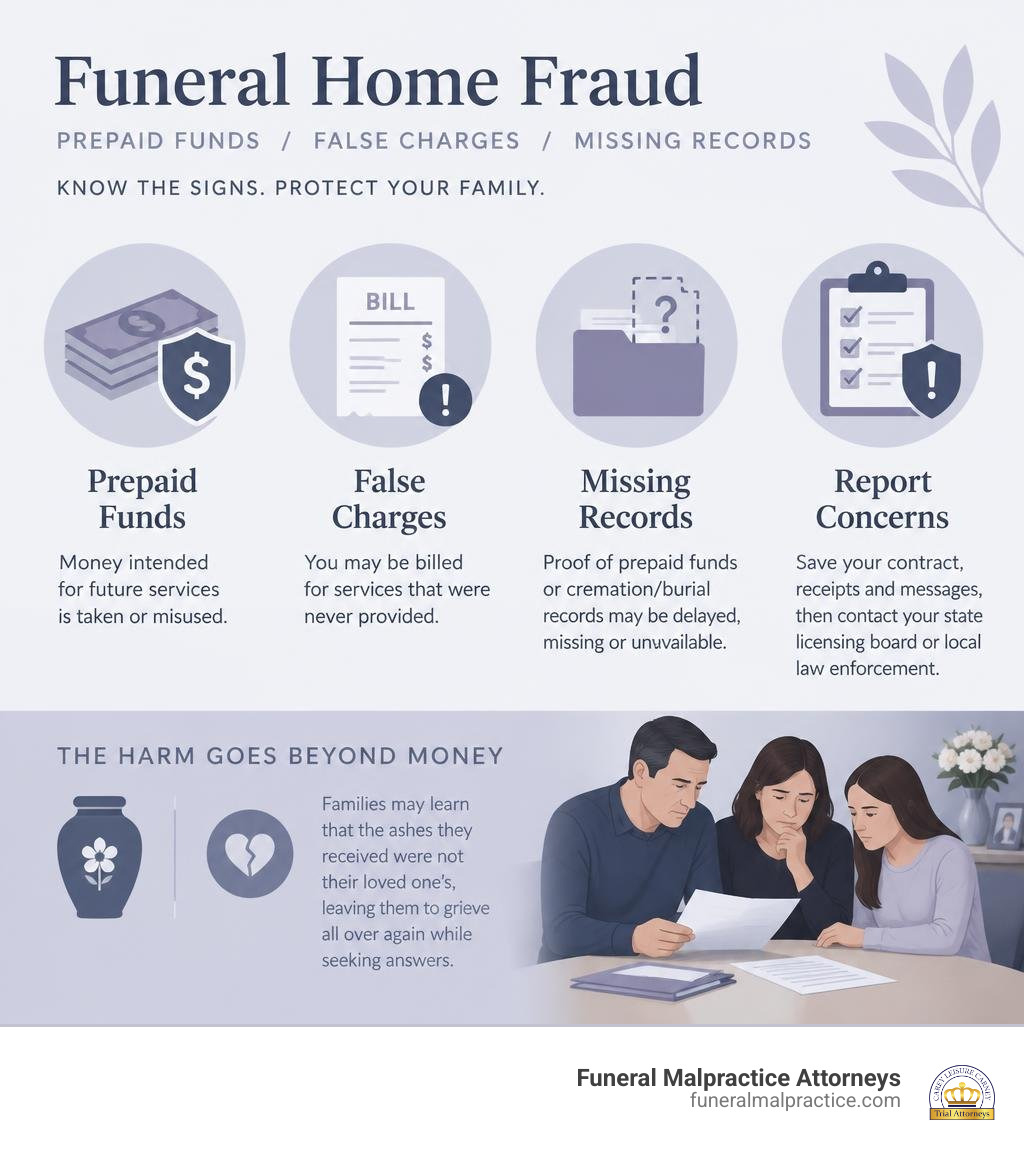
Funeral home fraud can mean taking prepaid funeral money, charging for services never provided, or lying about what happened to a loved one’s remains. Warning signs include vague bills, missing proof that prepaid funds were protected, and delays or refusals to provide cremation or burial records. If something does not add up, save your contract, receipts, and messages, then report your concerns to the state licensing board or local law enforcement.
The harm goes beyond money. Families may learn that the ashes they received were not their loved one’s, leaving them to grieve all over again while trying to find answers.
I’m Tom Carey, a Florida-based legal professional with experience as a senior partner in Pinellas County. I draw on that legal background to explain funeral home fraud and the steps families can take when they suspect wrongdoing.
When we place a loved one into the care of a mortuary, we rely on a sacred bond of professional ethics and human decency. In our legal practice across Clearwater, Florida, we see how devastating it is when that trust gets shattered. Grieving families must make major emotional and financial decisions within hours of a loss. Predatory operators recognize this profound vulnerability and manipulate standard sales procedures to extract illicit profits.
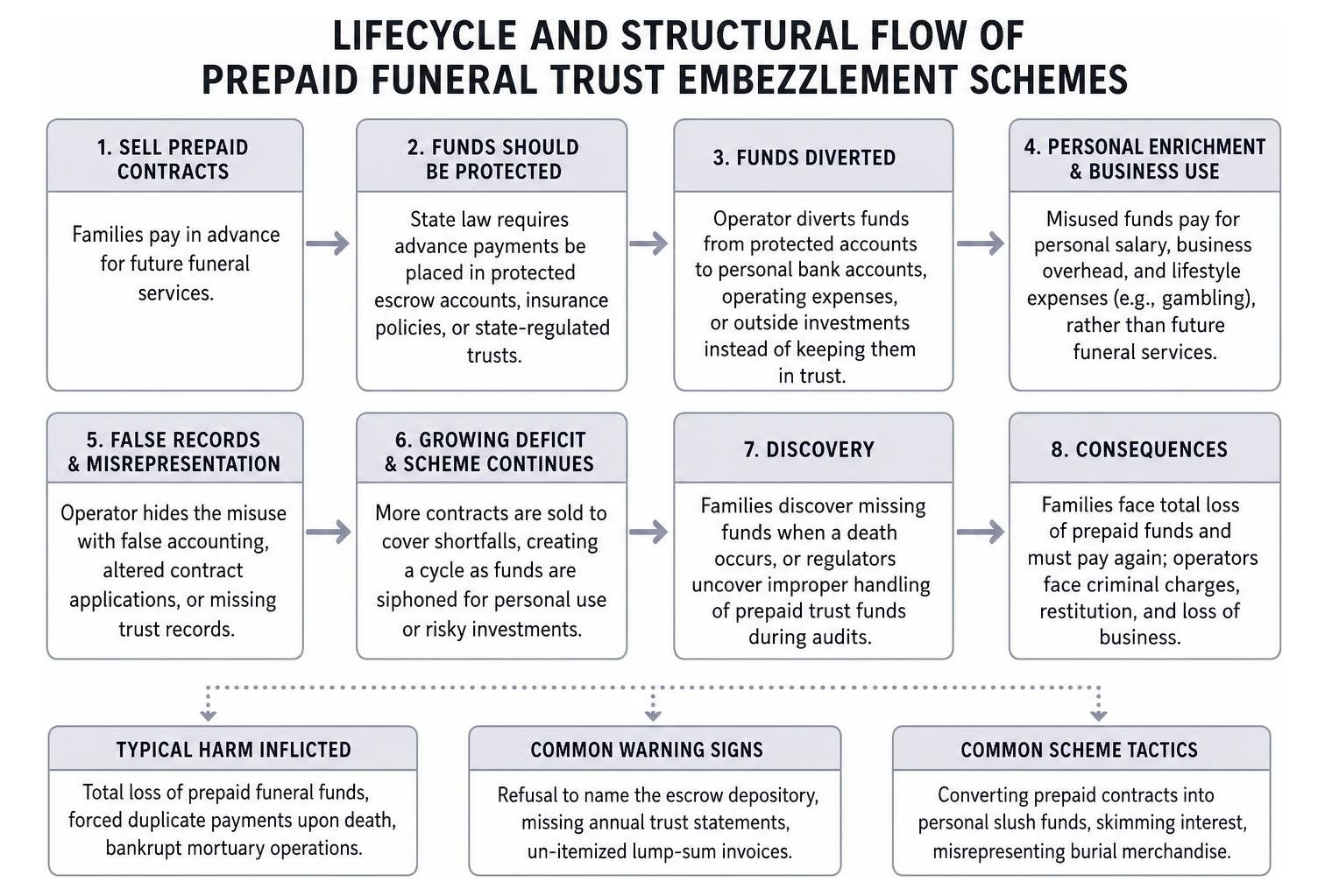
Deceptive business models in this space range from converting prepaid contracts into personal slush funds to skimming interest off protected accounts and misrepresenting burial merchandise. Families often discover the deception years later when a death occurs and prepaid funds have disappeared, or when regulators uncover that a funeral home was operating without proper oversight. Knowing how these schemes unfold is the first step toward protecting your family and holding bad actors accountable.
Understanding the Most Common Types of Funeral Home Fraud

Mortuary deception generally falls into two distinct categories: financial exploitation and physical mishandling of remains. Some operators run sophisticated balance-sheet schemes to pocket funds meant for future burials. Others cut operational costs by cutting corners on storage, embalming, and cremation services, sometimes committing severe acts of corpse abuse to hide their deceit.
Financial fraud frequently involves phantom service billing—charging for elaborate preparation, cosmetic restoration, or facility rentals that never took place. We also encounter merchandise switching, where a family purchases a premium mahogany casket or specialized bronze urn, but the mortuary quietly substitutes an inferior, low-cost alternative before burial or cremation.
To protect vulnerable consumers, learning how to protect grieving families from mortuary exploitation and embezzlement schemes has become a central focus of modern consumer advocacy and legal oversight.
| Fraud Category | Primary Mechanism | Warning Signs & Red Flags | Typical Harm Inflicted |
|---|---|---|---|
| Prepaid Trust Embezzlement | Diverting customer prepayment funds to personal bank accounts, operating expenses, or outside investments rather than state-regulated escrow trusts. | Refusal to name the escrow depository, missing annual trust statements, un-itemized lump-sum invoices. | Total loss of prepaid funeral funds, forced duplicate payments upon death, bankrupt mortuary operations. |
| Body Disposition Fraud | Falsifying cremation or burial certificates, neglecting proper refrigeration, swapping caskets, providing fake cremains (e.g., concrete mix). | Strong chemical/decay odors, excessive delays in releasing remains, refusal to allow identification viewing. | Profound emotional trauma, loss of closure, forensic re-identification costs, secondary bereavement. |
Embezzlement and Misappropriation of Prepaid Funeral Funds
State statutes strictly require funeral homes to hold advance customer payments in protected escrow accounts, insurance policies, or state-regulated trusts until the time of need. Despite these protections, unscrupulous operators regularly treat these funds as zero-interest personal loans.
In Michigan, longtime funeral director Terry Alvin Kaufman, 72, was sentenced to serve between 85 and 240 months in state prison after embezzling prepaid funeral funds from 204 victimized families. Kaufman systematically diverted advance payments to fund his personal salary and business overhead across a decade-long scheme, resulting in a mandatory court order of full restitution totaling $1,111,165.77.
In another brazen case, mortuary operator Philip Pietras faced extensive larceny and fraud charges after investigators discovered that over $300,000 in customer prepaid funds had vanished instead of being deposited into secure escrow accounts. Financial audits revealed that Pietras spent $1.2 million at the Mohegan Sun casino between January 2021 and November 2024, using grieving clients’ life savings to fuel heavy gambling losses.
On a broader scale, the National Prearranged Services (NPS) Ponzi-like prepaid funeral scheme defrauded approximately 97,000 customers across more than 16 states. Orchestrated by company executives who altered contract applications, diverted client trust funds into risky unauthorized investments, and siphoned policy values for personal enrichment, the massive fraud produced over $450 million in catastrophic consumer losses. Similar financial conversions happen in smaller businesses as well, illustrated by recent coverage of funeral director fraud uncovered by internal audits, where an operator misused nearly $170,000 in advance payments and fabricated death records for business cash flow.
Deceptive Disposition, Fake Ashes, and Improper Handling of Remains
The darkest side of funeral home fraud involves the physical neglect and deceptive disposition of deceased individuals. Rather than performing paid cremations or arranging dignified interments, some operators abandon bodies in substandard conditions to pocket the processing fees.
A horrific modern example occurred at the Return to Nature Funeral Home in Colorado, operated by Jon and Carie Hallford. Investigators discovered that the couple had abandoned at least 190 human bodies over four years, leaving remains to decompose in an uncooled, bug-infested facility while collecting more than $130,000 from families for cremations they never performed. To conceal their crimes, the operators distributed bags of dry powdered concrete to grieving families inside decorative urns, pretending the industrial mix was their loved one’s cremated remains.
When mortuaries cut corners, families face devastating situations involving crematory malpractice. Discovering that a family urn contains industrial materials or commingled remains requires prompt action; our guide details the steps to take if you suspect cremated remains are not your loved ones. These breakdowns also cause misidentified cremations and compound the trauma of what happens if a funeral home presents the wrong body during a public wake or private viewing.
The Devastating Intersection of Corpse Abuse, Embezzlement, and Financial Crimes

Funeral home fraud rarely occurs in isolation. It frequently intersects with other major crimes, including wire fraud, public benefits exploitation, insurance manipulation, and felony corpse abuse. When a mortuary operator abandons ethical business practices, they often balance their accounting sheets through systemic criminal acts.
During the COVID-19 pandemic, bad actors exploited federal relief programs designed to support struggling small businesses. Operators used fabricated payroll documentation and phantom customer records to secure hundreds of thousands of dollars through the CARES Act and the Small Business Administration (SBA) Economic Injury Disaster Loan (EIDL) program.
Concurrently, operators falsify government death certificates and forge burial permits to keep families, coroners, and state licensing boards in the dark. In Indiana, Gary Greiner faced an arrest based on a 37-count indictment involving grand theft and fraud after investigators discovered more than 140 sets of unreturned cremains across two separate properties. For further context, read the prosecution reporting on extensive funeral home fraud indictments to see how multi-agency task forces piece together complex financial and physical mortuary violations.
High-Profile Prosecutions and Penalties in Funeral Home Fraud
Federal and state prosecutors have significantly escalated their enforcement against mortuary fraud, securing lengthy prison sentences that reflect the predatory nature of these crimes.
In the Return to Nature case, Jon Hallford and his wife received three separate SBA EIDL disbursements totaling $882,300, which they spent on lavish personal purchases, luxury vacations, and vehicles while decomposing bodies accumulated in their building. Jon Hallford received a 240-month (20-year) federal prison sentence alongside state corpse abuse convictions carrying up to 40 years, and was ordered to pay $1,070,413.74 in restitution. His co-defendant, Carie Hallford, received a 30-year state prison term and 18 years in federal prison.
For complete investigative details regarding the federal prosecution, read the investigation of Colorado funeral home owners pleading guilty to federal fraud.
Emotional Trauma and Financial Devastation Inflicted on Families
The human toll of mortuary fraud extends far beyond monetary losses. When families learn that their loved one’s remains were abandoned, commingled, or substituted with concrete powder, they experience severe secondary bereavement trauma. The natural grieving process is disrupted by feelings of guilt, anger, and betrayal.
Families also face unexpected financial emergencies when a fraudulent facility collapses. They must often pay out-of-pocket for:
- Emergency exhumation and transport services to safe mortuaries
- Secondary cremation or burial expenses that were already paid once
- Forensic DNA verification and anthropological body identification testing
- Replacement caskets, vaults, and permanent cemetery plots
Regulatory Oversight Failures, Industry Gaps, and Legislative Reforms
The persistence of funeral home fraud highlights longstanding regulatory gaps across the country. Historically, state funeral boards have operated under limited budgets, conducting reactive inspections only after receiving formal consumer complaints rather than carrying out routine audits.
In some jurisdictions, the barrier to entry has been surprisingly low. Until recent legislative overhauls spurred by high-profile criminal cases, some states did not even require routine facility inspections or standard professional licenses for funeral directors. This lack of oversight allowed unlicensed, unvetted operators to accept human remains and manage millions of dollars in prepaid trust funds without independent oversight.
These systemic failures have prompted nationwide legislative action. States are now mandating:
- Universal background checks and professional licensing standards for all mortuary directors.
- Mandatory annual CPA audits of all prepaid funeral trust accounts and escrow deposits.
- Unannounced routine inspections of refrigeration storage units, embalming preparation rooms, and crematory retorts.
- Coordinated data sharing between county coroners, vital statistics registries, and law enforcement agencies.
Warning Signs and Red Flags to Spot Funeral Home Fraud
Families can protect their interests by watching for common warning signs when selecting a mortuary or reviewing existing prepaid contracts:
- Refusal to Provide a General Price List (GPL): The Federal Trade Commission (FTC) Funeral Rule requires mortuaries to provide an itemized pricing sheet immediately upon request. Evasive pricing is an immediate red flag.
- Missing Escrow Documentation: When setting up a prepaid funeral plan, the provider must furnish the exact name, routing details, and account number of the insured trust or escrow institution holding your funds.
- Aggressive Sales Tactics: High-pressure pitches urging you to purchase unnecessary services, expensive sealer vaults, or non-refundable package upgrades during active bereavement indicate predatory practices.
- Unusual Physical Odors: Persistent, pungent odors of decomposition or masking chemicals in the public areas of a facility point to failing refrigeration equipment or improper storage procedures.
- Delays in Cremation Documentation: If a funeral home repeatedly delays providing an official, state-certified cremation certificate or avoids explaining where the actual cremation will occur, investigate immediately.
Whistleblowers and Multi-Agency Law Enforcement Investigations
Uncovering complex mortuary schemes requires close cooperation between whistleblowers and law enforcement. In Ontario, an extensive multi-year fraud was brought to justice only after the funeral director’s own son uncovered forged death certificates and un-deposited trust payments, promptly reporting the evidence to the provincial Bereavement Authority.
In Indiana, charges against Gary Greiner followed a joint investigation that brought together the Vigo County Prosecutor’s Office, the Terre Haute Police Department, the Vigo County Coroner’s Office, and the Indiana Funeral Directors Association. When coroners, licensing boards, and local police work alongside vigilant family members, they can intervene before more families suffer.
Legal Recourse, Restitution, and Civil Compensation for Defrauded Families
Families who have experienced funeral home fraud have clear legal paths to seek accountability, financial compensation, and justice. While criminal courts impose prison sentences and restitution orders, civil litigation allows families to directly challenge the bad actors, recover stolen assets, and address the severe emotional harm caused by their misconduct.
Through a focused civil lawsuit, families can pursue claims for:
- Intentional or Negligent Infliction of Emotional Distress: Securing financial damages for the severe psychological trauma caused by the desecration, mishandling, or fraudulent substitution of a loved one’s remains.
- Breach of Fiduciary Duty: Holding funeral directors liable for violating their legal obligation to manage prepaid funds and protect remains with reasonable care.
- Fraud and Deceptive Trade Practices: Recovering stolen funds, treble damages, and statutory attorney fees under state consumer protection laws.
- Third-Party Negligence: Pursuing financial institutions, trust administrators, or insurance underwriters that failed to monitor and safeguard customer escrow funds.
If you suspect that your family has been targeted by deceptive mortuary practices, understanding your legal rights is essential. Learn more about your options by understanding funeral malpractice claims and legal grounds.
Frequently Asked Questions About Funeral Home Negligence
What are the earliest indicators that a funeral home is mishandling prepaid funds?
The most reliable early warning sign is the absence of an annual escrow statement from an independent financial institution. When you prepay for a funeral, your money should not sit in the funeral home’s general operating account. The director must provide written verification showing that your money is held in a state-regulated trust or an assignment-of-proceeds life insurance policy. If the director cannot name the holding institution, avoids questions about interest growth, or refuses to provide itemized receipts, your funds may be at risk.
Can victims recover money if a fraudulent funeral home declares bankruptcy?
Yes, victims have multiple options for financial recovery even if the business files for bankruptcy. Intentional fraud, embezzlement, and willful misconduct cannot be discharged in bankruptcy court. Additionally, many states maintain victim compensation funds or funeral guaranty funds designed to reimburse consumers when a licensed director steals prepaid assets. An attorney can also help you pursue claims against third-party trust administrators, surety bond companies, or related business entities that facilitated the fraud.
What immediate steps should families take if they suspect funeral malpractice or fraud?
If you suspect fraud or malpractice:
- Secure All Documentation: Gather all original contracts, cancelled checks, bank statements, itemized price lists, and written communications.
- Contact Local Authorities: File a formal report with your local police department, county coroner, and state attorney general’s consumer protection division.
- Notify the State Licensing Board: File an expedited complaint with your state’s funeral and cemetery regulatory board to trigger an official investigation.
- Consult Legal Counsel: Contact experienced legal representation to protect your rights, prevent the destruction of crucial records, and pursue financial and emotional recovery.
Conclusion
Prepaying for funeral services and arranging the final resting place of a family member should offer comfort—not financial loss or emotional trauma. Yet bad actors continue to exploit the vulnerability of grieving families through trust embezzlement, corpse neglect, and deceptive billing.
Preventing these abuses requires ongoing legislative reform, strict regulatory oversight, and informed consumers who know the warning signs. If you suspect that a mortuary has mishandled your loved one’s remains or stolen prepaid funds, you do not have to navigate the aftermath alone. Contact Funeral Malpractice Attorneys today to speak with our compassionate legal team about securing accountability, restoring your peace of mind, and recovering the justice your family deserves.